
A wet basement is rarely the real problem. It is usually the last stop for water that was never directed away from the house in the first place. The best exterior drainage solutions address where water starts, how it moves across your property, and where it can safely go after a storm.
For Greater Cincinnati homeowners, that matters. Heavy rain, clay-heavy soil, rolling lots, and older homes can all make water management more complicated. A dependable solution is not always the most visible or expensive one. It is the one that matches your home’s layout, soil, roofline, and drainage path.
Start With the Water’s Path
Before choosing a drain, trench, or grading project, look at what happens during a steady rain. Water should move away from the foundation without pooling near walls, flowing over walkways, or collecting at the bottom of a slope.
Pay attention to gutters that overflow, downspouts that empty beside the house, mulch beds that hold water, and low spots in the lawn. Also look for stains on foundation walls, dampness near basement corners, cracked pavement, washed-out landscaping, or soil that stays soft days after rain. These signs do not always mean a major drainage system is needed, but they do mean the water path deserves attention.
A good drainage plan begins with the simplest correction that can solve the actual problem. That approach protects your budget and avoids unnecessary disruption to your property.
The Best Exterior Drainage Solutions, Explained
Proper grading
Grading is often the most important part of exterior drainage because it determines whether surface water naturally leaves or returns to your foundation. Ideally, the ground slopes gradually away from the home for several feet. When soil has settled over time, the grade can tilt toward the house and send rainwater directly where it does not belong.
Regrading may involve adding and compacting soil, reshaping planting beds, or adjusting the transition between the house, driveway, patio, and yard. It is a practical solution for shallow puddling and broad areas of standing water near the foundation.
Grading has limits. If a neighboring property drains toward your home, the yard has a steep slope, or water is trapped by hardscaping, soil alone may not provide enough control. In those cases, grading often works best alongside a drain or downspout extension.
Gutters and correctly placed downspouts
Gutters are your first line of defense against roof runoff. A large roof can shed a surprising amount of water during one storm, and that water needs a controlled route away from the home.
Clean, properly sized gutters and secure downspouts prevent water from spilling over roof edges and saturating the soil around the foundation. Downspouts should discharge well away from the house, not just a foot or two into a flower bed. Extensions can be above ground or buried, depending on the layout of the property and the desired appearance.
This is one of the most cost-effective places to start, especially when water problems appear near a specific corner of the home. However, downspout extensions should never send water toward a neighbor’s yard, a walkway, or a driveway where it can freeze in winter.
Underground downspout drains
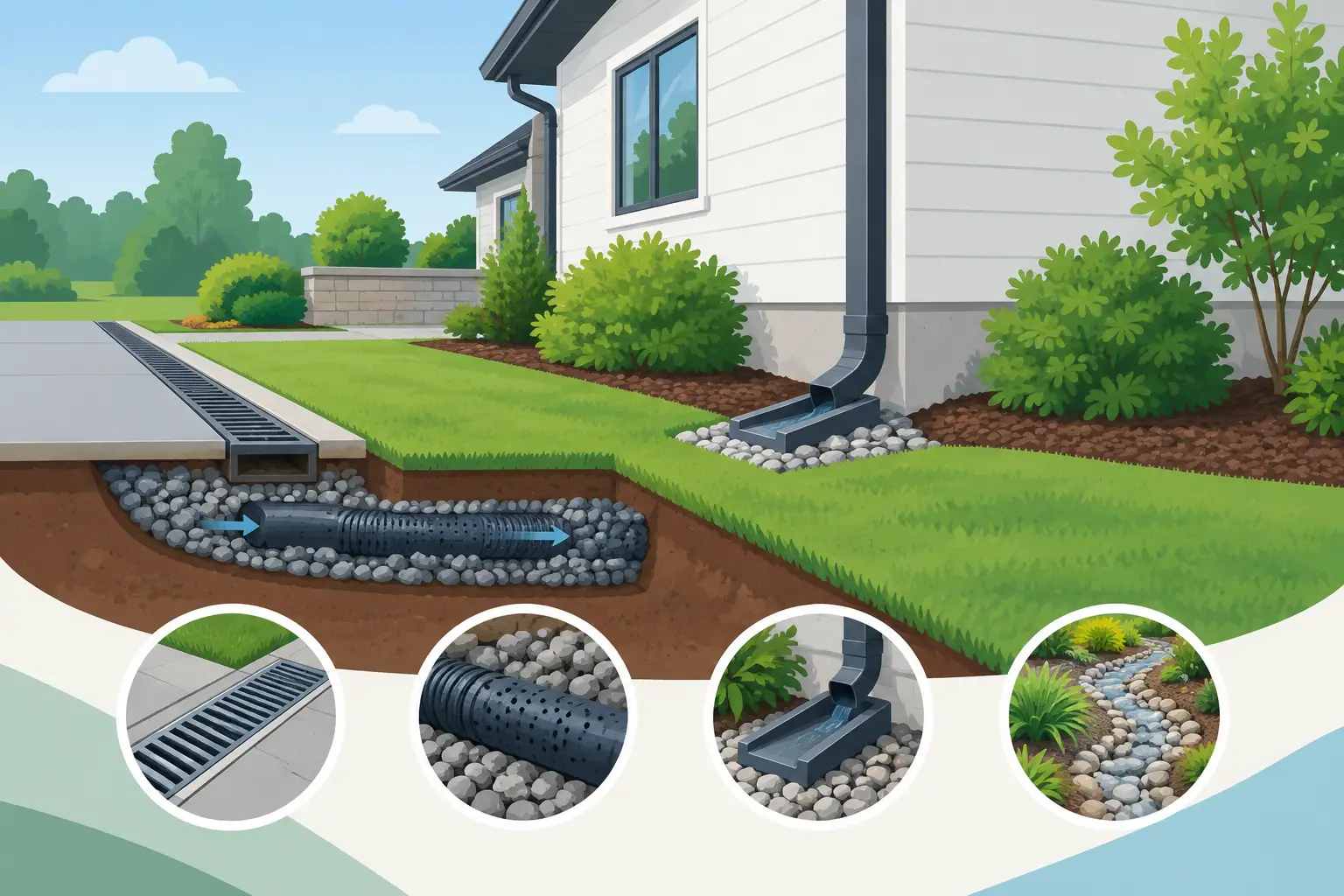
An underground downspout drain carries roof runoff through buried piping to a suitable discharge point. It can keep extensions out of sight, reduce erosion around beds, and move water farther from the foundation than a standard splash block allows.
The key is proper installation. Buried lines need adequate slope, durable connections, and a discharge location that remains open and functional. A pipe that ends in a low, saturated area can simply relocate the problem. It may also back up if the outlet is blocked by leaves, soil, or ice.
For homeowners who want a cleaner appearance without sacrificing drainage performance, this can be an excellent choice. It is especially useful where visible extensions would cross a frequently used lawn or walkway.
French drains and yard drains
French drains are designed to collect water moving through saturated soil. They generally use perforated pipe, stone, and filter fabric to gather groundwater and guide it away. They are useful in persistently soggy areas, along slopes, or where water seems to rise from the ground rather than flow only across the surface.
A yard drain, sometimes called a catch basin or area drain, is more suited to surface water. It collects runoff at a low point through a grate and sends it through solid pipe to a discharge area. These drains can help near patios, walkouts, driveways, and low lawn areas that receive fast-moving rainwater.
The difference matters. Installing a French drain where a surface drain is needed may not stop visible pooling. Installing a catch basin where soil is constantly saturated may not relieve the underlying moisture. A careful site assessment helps determine which system fits the water source.
Swales and landscape channels
A swale is a shallow, gently shaped channel that guides surface water across the yard. It can be grass-lined, landscaped, or built with stone where erosion is a concern. When planned well, a swale blends into the property more naturally than a visible drain system.
This option works well on larger lots with enough space to direct water safely. It can also protect landscaping by keeping runoff from cutting through beds or washing mulch onto hard surfaces.
Swales are not a cure-all. They need a clear destination, and they must be shaped carefully enough to move water without becoming a muddy trench. Local grading conditions and property boundaries should always be considered before redirecting runoff.
Channel drains for hardscaped areas
When water collects at the base of a driveway, in front of a garage, along a patio, or near a pool deck, a channel drain can be the right answer. These long, narrow drains sit flush with the surface and capture water before it reaches a structure or creates a slippery area.
They are more targeted than a yard drain and are commonly installed during new concrete, paver, or patio work. Retrofitting is possible, but it can require cutting and repairing existing surfaces. That added labor is worthwhile when drainage is threatening a garage, entryway, or finished outdoor space.
Choosing the Right Solution for Your Property
The right system depends on the source of the water. Roof runoff calls for gutter and downspout improvements. A low yard may need grading, a swale, or a yard drain. Water that saturates soil along a hillside may call for a French drain. Many homes need a combination of smaller fixes rather than one large installation.
It is also wise to think about maintenance before choosing a solution. Gutters need cleaning. Drain grates need to stay clear of leaves and mulch. Buried lines may need cleanouts or periodic flushing. A drainage system should make life easier, but it should also be accessible enough to inspect and maintain.
Avoid quick fixes that only hide the issue. Adding more mulch beside a foundation, routing a downspout into an undersized buried pipe, or filling a low spot without correcting the overall slope can leave the water with nowhere useful to go. The goal is not simply to move water out of sight. It is to move it safely away from the home.
When to Bring in a Professional
A homeowner can often handle basic gutter cleaning, splash blocks, and minor extension adjustments. Professional guidance is valuable when water enters a basement, erosion exposes foundation areas, standing water persists after storms, or drainage changes may affect neighboring properties.
A trustworthy contractor should explain what is causing the problem, outline realistic options, and be clear about the work involved. Ask where the water will discharge, how the system will be accessed later, and whether grading or landscaping will need restoration. Clear answers before work begins help prevent expensive surprises later.
At Harbor Exteriors, the focus is on helping homeowners understand their exterior concerns before recommending a path forward. The right drainage work should bring confidence, not confusion.
Water will always find the easiest route across your property. A thoughtful exterior drainage plan makes sure that route leads away from the place you have worked hard to call home.