
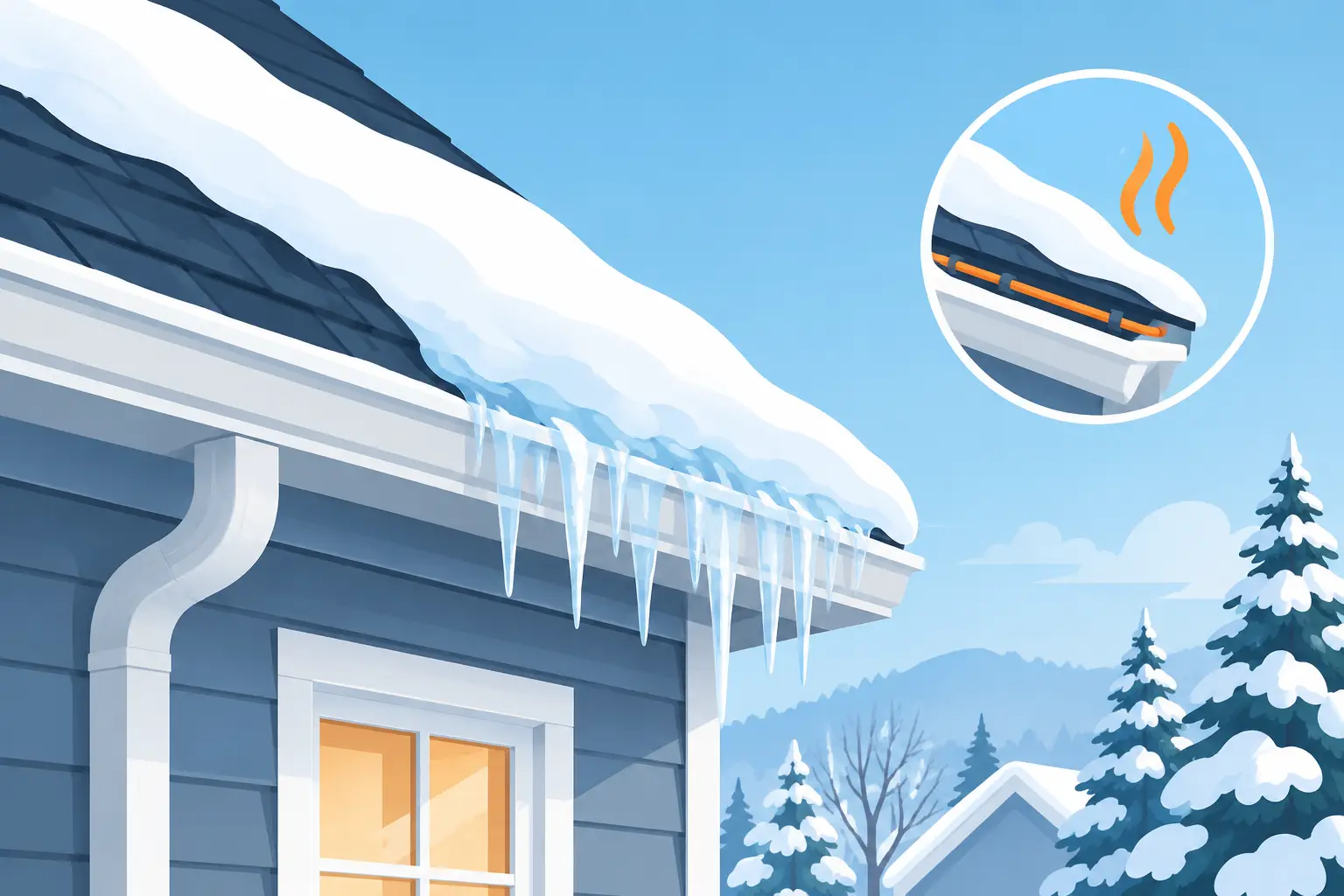
A line of icicles may look harmless from the sidewalk, but ice building up along the roof edge can signal a problem above it. Learning how to prevent ice dams starts with understanding that the issue is usually not the gutter. It is heat escaping into the attic, melting snow unevenly, and allowing water to refreeze at the colder edge of the roof.
For Greater Cincinnati homeowners, winter often brings the exact weather pattern that creates trouble: snow, followed by daytime thawing temperatures and overnight freezes. A little attention before winter can help protect your roof, attic, ceilings, walls, and gutters from expensive water damage.
What causes an ice dam?
An ice dam forms when the upper portion of a roof is warm enough to melt the snow sitting on it. Meltwater runs downward until it reaches the roof overhang, which is typically colder because it extends beyond the heated living space. There, the water refreezes.
As that ridge of ice grows, later meltwater cannot drain off the roof. It pools behind the ice and can work its way beneath shingles, underlayment, and flashing. Once water gets into those layers, it may show up as a ceiling stain, peeling paint, wet insulation, or a leak that seems to appear without warning.
The goal is not to keep every inch of a roof cold. The goal is to keep the roof deck as consistently cold as possible during snowy weather while giving any moisture in the attic a safe way out.
How to prevent ice dams at the source
The most dependable fix addresses airflow and heat loss inside the home. Clearing ice from the roof may help in the moment, but it does not correct the conditions that created it. Start with an attic evaluation before assuming your roofing materials are to blame.
Seal air leaks into the attic
Warm household air naturally rises. If there are gaps around plumbing stacks, electrical wiring, recessed lights, attic access hatches, bathroom fan ducts, or chimney chases, that warm air can enter the attic and heat the underside of the roof.
Air sealing is often one of the highest-value improvements a homeowner can make. It helps reduce uneven roof temperatures while also improving comfort and energy efficiency throughout the house. An attic hatch, for example, should fit tightly and be insulated. Bathroom exhaust fans should vent outdoors, not into the attic, where humid air can contribute to frost, mold, and wood deterioration.
Some air leaks are easy to spot. Others are hidden beneath insulation or around older framing details. If your home has recurring ice dams, drafts, or unusually high winter energy bills, a professional assessment can identify where heated air is getting out.
Make sure attic insulation is adequate and even
Insulation slows the movement of heat from your living space into the attic. When it is thin, uneven, compressed, or missing around the perimeter, warm spots can develop on the roof and lead to snow melt.
Adequate insulation looks different from home to home. The right amount depends on the attic design, existing materials, and local climate. What matters just as much as depth is coverage. Insulation should be distributed evenly, without bare areas around exterior walls, attic access points, or framing transitions.
Avoid packing insulation tightly against roof ventilation openings at the eaves. Baffles can maintain a channel for outside air to move from the soffits into the attic while keeping insulation where it belongs. This is one of those details that can make a meaningful difference in a cold spell.
Maintain balanced attic ventilation
Ventilation allows cold outside air to move through the attic, helping keep the roof deck closer to the outdoor temperature. A properly designed system usually brings air in through soffit vents and lets it exit through ridge vents or other high roof vents.
More vents are not automatically better. Randomly adding roof vents without considering intake, exhaust, and attic layout can create weak airflow or introduce new leak points. Blocked soffits, disconnected ducts, or insulation covering intake vents can also limit a system that otherwise looks adequate from the outside.
A qualified roofing or exterior professional can assess whether the attic has balanced ventilation and whether any changes make sense for the home. This matters especially with older homes, finished attic spaces, and rooflines that have multiple valleys, dormers, or additions.
Keep snow and drainage from adding pressure
Attic improvements address the cause, but roof maintenance still plays an important role. Gutters and downspouts should be clear before winter. Leaves and debris can trap water at the roof edge, where it freezes more easily and adds weight to the gutter system.
Trim branches that hang over the roof when practical. They can drop leaves into gutters and make it harder for snow to slide or melt evenly. Also look for loose shingles, damaged flashing, sagging gutters, and areas where water already drains poorly. Small repairs are easier to manage before snow and ice make the roof unsafe to access.
After a heavy snowfall, a roof rake can reduce the amount of snow near the eaves. Use one from the ground and choose a model designed for roofing. Pull snow downward gently without scraping hard against the shingles. The goal is to remove the lower few feet of snow, not to strip the roof bare.
Do not climb onto an icy roof to shovel it. It is a serious fall risk, and tools can damage shingles, gutters, or flashing. Be cautious with heated cables as well. They may create channels for meltwater, but they do not resolve heat loss in the attic and can become a maintenance concern if installed poorly.
What to do when an ice dam has already formed
If water is entering the house, move valuables away from the affected area and contain drips with buckets or towels. Watch for bulging drywall or saturated ceilings, which can become a safety concern. Take photos of visible damage for your records.
Avoid attacking the ice with an axe, hammer, chisel, or ice pick. Those methods can tear shingles and puncture roofing materials, turning one problem into a larger repair. Chemical de-icers should also be used carefully, since some products can harm landscaping, metal gutters, or roof materials.
A roofing professional can help assess the roof safely and recommend an appropriate removal method. In some situations, controlled steam removal is the least damaging option. Once the immediate issue is handled, schedule an inspection of the attic, insulation, ventilation, roof surface, and drainage system. Repeated ice dams deserve a root-cause solution, not another temporary response after the next storm.
When a roofing inspection is worth scheduling
A one-time buildup after an unusually severe storm may not mean your home has a major defect. Recurring ice along the same roof edge, however, is worth investigating. So are interior water stains, frost on attic framing, damp insulation, icicles concentrated in one location, and uneven snow melt across the roof.
Roof age can also be a factor. Worn shingles, deteriorated flashing, and failed underlayment may allow backed-up water to enter more easily. In certain roof replacements, an ice and water barrier along vulnerable eaves and valleys adds another layer of protection. It is valuable protection, but it should support proper insulation and ventilation rather than replace them.
A trustworthy contractor should explain what they see, distinguish urgent repairs from recommended improvements, and give you a clear path forward. At Harbor Exteriors, that kind of straightforward communication matters because a homeowner should never have to guess why a roof problem is happening or what the proposed work is meant to solve.
Before the first lasting snowfall, take a few minutes to look at your gutters, attic access, and roofline from the ground. That small check can be the beginning of a warmer attic, a drier home, and a much quieter winter when temperatures start to swing.