
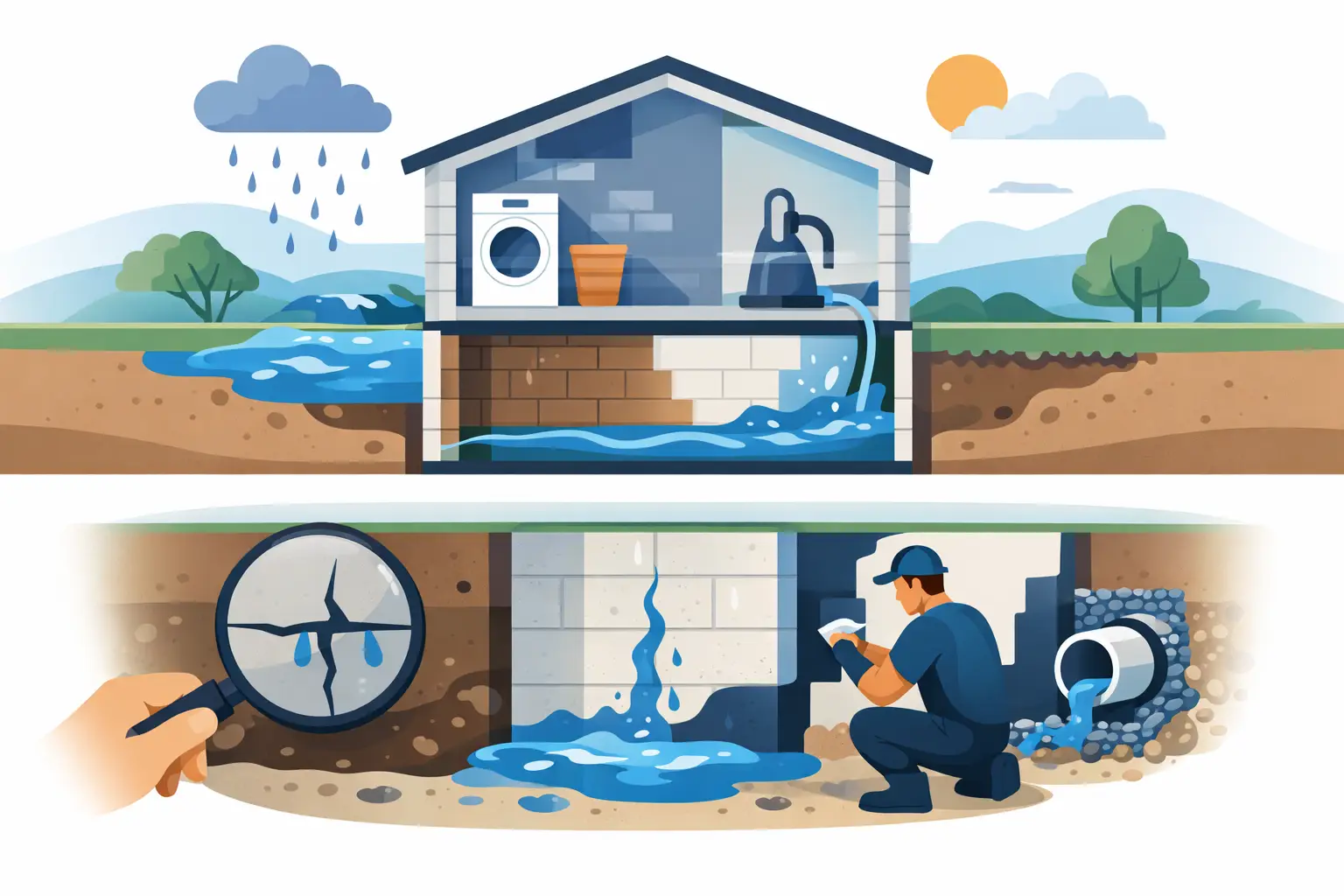
A damp basement rarely begins with a dramatic flood. More often, it starts with a faint musty smell after a storm, a dark line along a foundation wall, or a small puddle near a corner. To prevent basement water intrusion, homeowners need to look beyond the basement itself and manage where rainwater goes once it reaches the roof, yard, and foundation.
That matters in Greater Cincinnati, where heavy spring rains, summer downpours, winter freeze-thaw cycles, and rolling lots can all put pressure on a home's drainage. The good news is that many water problems can be reduced or avoided when they are addressed early and from the outside in.
Why Basement Water Finds Its Way In
Water follows the easiest available path. When soil beside the home is saturated, water can press against foundation walls and work through cracks, porous concrete, window wells, utility openings, and gaps around pipes. Even a basement that has stayed dry for years can develop a problem after grading settles, gutters clog, or drainage conditions change around the property.
The source is not always obvious. A wet spot on one wall may be caused by a missing downspout extension several feet away. Water near a basement window may come from an overflowing gutter above it. Before spending money on an interior solution, it is wise to understand what is feeding water toward the foundation.
Start With the Roof Drainage System
Your roof collects a surprising amount of water during a storm. Gutters and downspouts are meant to carry that water safely away, but they can only do their job when they are clean, securely attached, and properly directed.
Check gutters at least twice a year and after major storms. Leaves, twigs, shingle grit, and nesting material can create blockages that cause water to spill over the gutter edge. That overflow often lands directly beside the foundation, where it soaks the soil and increases the chance of seepage below grade.
Pay close attention to downspouts. Each downspout should discharge well away from the home, not onto a short splash block that ends next to the foundation. In many cases, an extension that carries water at least 4 to 6 feet away is a sensible starting point. The right distance depends on the slope of the property, soil conditions, and local drainage layout, but the goal is always the same: move water away from the house without sending it toward a neighbor's property or a walkway.
If downspouts drain underground, make sure those lines are open and have a clear outlet. A buried extension that is clogged or crushed can quietly return water to the foundation. During a hard rain, walk the perimeter and watch where the water actually goes. That simple observation often reveals more than a quick visual inspection on a dry day.
Grade the Soil Away From the Foundation
The ground around your home should slope away from the foundation so rainwater naturally drains outward. Over time, however, mulch beds settle, soil erodes, landscaping is added, and the original grade can become flat or slope back toward the house.
As a general rule, the soil should drop about 6 inches over the first 10 feet away from the foundation where the property allows. Not every Cincinnati yard has enough space or a simple layout to achieve that exact slope, especially on compact lots or hillside homes. Still, even modest corrections near the foundation can make a meaningful difference.
Look for low spots, settled areas under rooflines, and flower beds that hold water after rain. Add clean fill soil as needed, then shape it so water moves away from the home. Avoid piling soil or mulch high against siding, brick weep holes, or wood trim. That can create separate moisture and pest concerns while also hiding the foundation condition.
Landscaping should support drainage, not fight it. Decorative edging, dense plantings, and raised beds can unintentionally form a dam against the house. If water pools in those areas, adjust the bed design or add drainage measures rather than assuming the basement wall is the only issue.
Protect Basement Windows and Window Wells
Below-grade windows are common entry points for water. A window well should be clean, intact, and designed to drain. If it fills with leaves, sediment, or standing water, rain can collect against the window and eventually find its way inside.
Clear debris from window wells regularly, especially in fall. Make sure the well rises above the surrounding grade and that its cover, if installed, is secure and in good condition. A clear cover can help keep out leaves and reduce the volume of rain entering the well, but it should not be treated as the only drainage solution.
If a window well repeatedly holds water, the drain at its base may be blocked, disconnected, or absent. This is a situation worth evaluating carefully. Depending on the home's construction, a professional may recommend repairing the drain, improving grading nearby, or connecting the well to an appropriate drainage system. Simply sealing the window may not solve pressure from trapped water around the opening.
Inspect the Foundation Without Guesswork
Small hairline cracks in concrete can be common, particularly as a home settles. Not every crack means there is a serious structural problem, but cracks that allow moisture through deserve attention. Mark or photograph them and check whether they change over time.
Watch for white, chalky residue on walls, peeling paint, damp drywall, rusty metal, soft baseboards, or a persistent odor. These signs can point to recurring moisture even when the floor is not visibly wet. Addressing the source early may help protect finished spaces, stored belongings, and indoor air quality.
Be cautious about relying on caulk or waterproof coating as a complete fix. Surface repairs can be helpful for minor, isolated openings, but they do not redirect water that is continually collecting outside the wall. A trustworthy contractor should explain whether the issue appears to be a simple maintenance repair, an exterior drainage problem, or a condition that calls for a basement waterproofing specialist or structural evaluation.
Do Not Overlook Plumbing and Indoor Humidity
Not all basement moisture comes from outdoors. Condensation can form on cool walls, pipes, and floors during humid weather. A leaking appliance, water heater, supply line, or HVAC component can also look similar to seepage at first glance.
A dehumidifier can make a basement more comfortable and help control humidity, particularly in finished or partially finished areas. It is not, however, a substitute for correcting outdoor drainage. If you need to run a dehumidifier constantly because water is entering after rain, the problem likely begins outside.
To separate moisture sources, pay attention to timing. Water that appears after storms suggests drainage or groundwater. Moisture that appears when laundry equipment runs or after the air conditioner has been operating may point to plumbing or condensate issues. A clear pattern helps the right professional diagnose the problem instead of treating symptoms.
A Seasonal Routine to Prevent Basement Water Intrusion
Consistent maintenance is often more effective than waiting for a visible leak. Before spring rain arrives, clear gutters, inspect downspouts, and walk the property for settled soil. In summer, check that landscaping has not created low spots or blocked drainage paths. Before fall leaf drop, confirm window wells and gutter outlets are clear. During winter thaws, look for ice dams, overflowing gutters, or water collecting near the foundation.
After every unusually heavy storm, take five minutes to inspect the basement and exterior perimeter. Note where water is standing, where downspouts discharge, and whether the soil is holding moisture near the house. Keeping a few photos can be useful if a recurring issue needs professional attention later.
When to Call for Help
Some projects are well suited to a homeowner, such as cleaning gutters, extending a downspout, or refreshing minor grading. Others require more expertise. Repeated water entry, visible foundation movement, large or widening cracks, failed underground drains, and persistent standing water are all reasons to bring in a qualified professional.
Ask for a clear explanation of the proposed work, what problem it is intended to solve, and what limitations may remain. The lowest-cost repair is not always the best value if it only hides water for a season. At Harbor Exteriors, we believe homeowners deserve straightforward guidance, honest communication, and a plan that addresses the condition in front of them.
A dry basement begins with water having somewhere better to go. A careful inspection after the next rain can give you a practical first step and help protect your home before a small warning sign becomes a larger repair.