
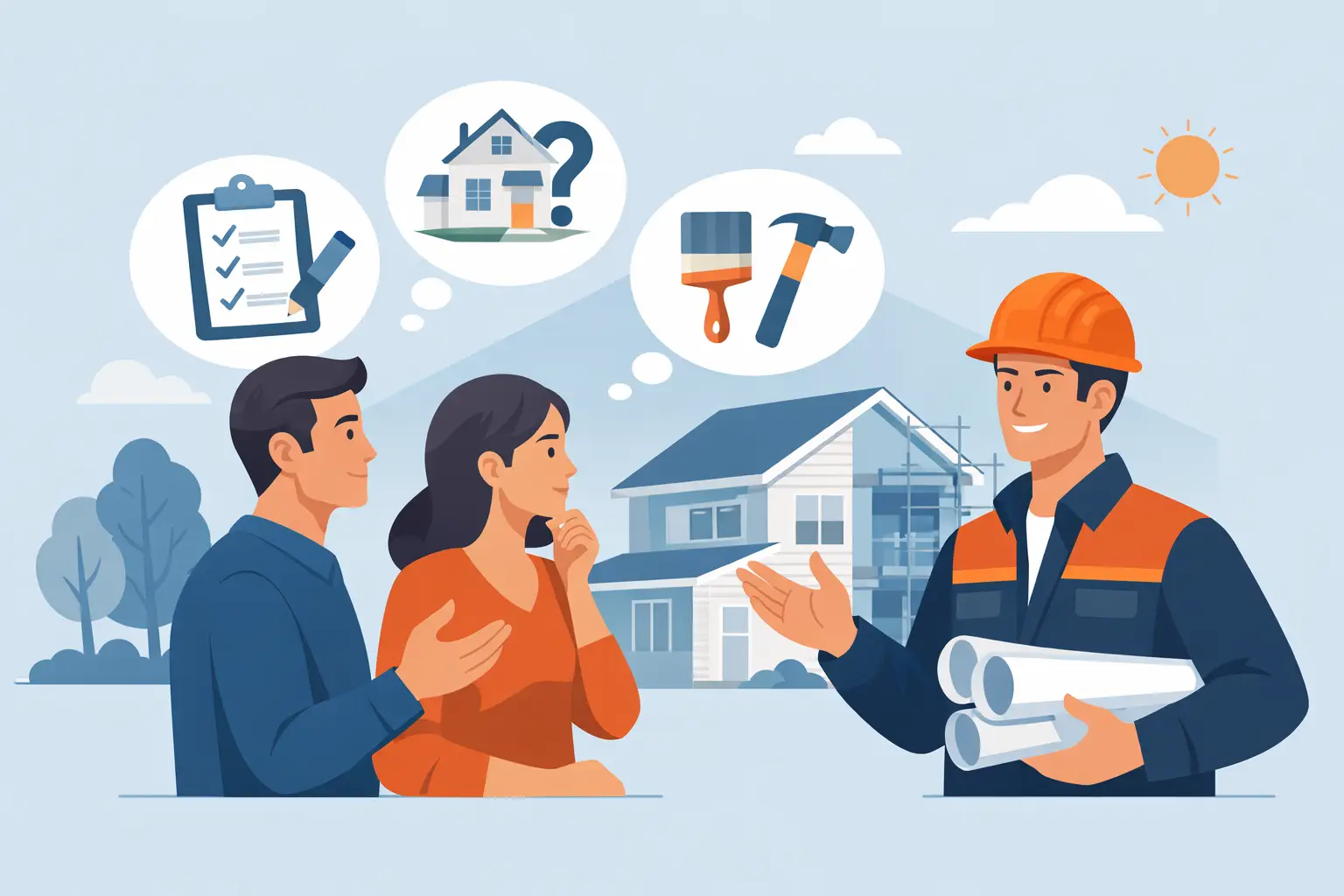
A roof leak after a hard Cincinnati storm, siding that no longer keeps out moisture, or gutters that overflow near the foundation can make hiring help feel urgent. Still, the right questions to ask an exterior contractor can protect you from rushed decisions, unclear pricing, and work that does not hold up over time.
A trustworthy contractor should welcome careful questions. You are inviting a company to work on one of your largest investments, and you deserve clear answers about the scope, cost, schedule, materials, and accountability before work begins.
Questions to Ask an Exterior Contractor Before Hiring
1. Are you licensed, insured, and able to provide proof?
Start with the basics. Ask whether the company carries general liability insurance and workers’ compensation coverage, then ask for documentation. Proper coverage matters if an accident or property damage occurs during the project.
Requirements can vary by municipality, so licensing may look different depending on where you live in Greater Cincinnati. A qualified contractor should explain what applies to your project without becoming defensive or vague.
2. How long have you been serving homeowners in this area?
Local experience is more than a number of years in business. Exterior work in this region must account for heavy rain, wind, humidity, freeze-thaw cycles, and seasonal temperature changes. Those conditions affect material choices, installation timing, and long-term performance.
Ask whether the contractor has completed projects similar to yours nearby. A company familiar with local homes and weather patterns is better positioned to recommend work that fits your property rather than offering a one-size-fits-all solution.
3. What exactly is included in my written estimate?
An estimate should make the project easier to understand, not harder. Ask for a written breakdown that identifies labor, materials, removal of old materials, disposal, permits if needed, and any expected repairs.
Be especially careful with broad descriptions such as “repair as needed.” Some hidden damage cannot be confirmed until work begins, which is reasonable. But the contractor should explain how those discoveries will be documented, priced, and approved before additional work proceeds.
4. What is not included in the price?
This question can prevent difficult conversations later. Ask about exclusions, including interior repairs, structural repairs, landscaping protection, permit fees, painting, or replacement of damaged decking or trim.
A lower bid is not always a better value. One proposal may appear less expensive because it leaves out removal, flashing, cleanup, or other necessary parts of the job. Compare the scope of work, not just the total at the bottom of the page.
5. Which materials do you recommend, and why?
A dependable contractor should be able to explain material options in plain language. Ask about expected lifespan, maintenance needs, manufacturer warranty coverage, color choices, and how each option performs in local conditions.
The best material depends on your home, budget, and priorities. A homeowner planning to stay for decades may choose differently than someone preparing to sell within a few years. Honest guidance acknowledges those trade-offs instead of steering every customer toward the most expensive option.
6. Who will perform the work at my home?
Ask whether the company uses employees, subcontractors, or a combination of both. Neither arrangement is automatically a concern, but you should know who is responsible for the workmanship and who will be on your property.
Also ask whether a project manager or site supervisor will be assigned. One clear point of contact helps prevent mixed messages and gives you someone to call if you have a question during the project.
7. What is the expected timeline, and what could change it?
Exterior projects depend on weather, material availability, and the condition of the home once existing materials are removed. A contractor cannot promise that every day will go exactly as planned, but they should provide a realistic expected start date and project duration.
Ask how weather delays are handled and how often you will receive updates. Clear communication matters as much as the original timeline. You should not have to wonder whether your project has been postponed or when the crew plans to return.
8. How will you protect my property while work is underway?
Exterior work can involve ladders, tools, debris, delivery trucks, and material removal. Ask how the crew will protect landscaping, driveways, walkways, windows, outdoor furniture, and nearby areas.
It is also helpful to ask what you need to do before the project starts. Moving vehicles, securing pets, clearing patio items, and making access available can help the work move safely and efficiently.
9. How will you handle cleanup and debris removal?
Cleanup should be part of the plan, not an afterthought. Ask where debris will be placed, whether a dumpster is necessary, how nails and small materials will be collected, and when final cleanup will occur.
For roofing work in particular, ask whether the crew uses magnetic sweeping for nails. A professional job should leave your property cared for, not create a new safety concern for your family, pets, or tires.
10. What happens if you find hidden damage?
Rotten wood, damaged sheathing, moisture intrusion, and improperly installed flashing are sometimes only visible after old materials come off. This is one of the most practical questions to ask an exterior contractor because it reveals how the company handles the unexpected.
Ask whether the contractor will show you the issue, explain the recommended repair, provide a change order, and receive your approval before proceeding. The goal is not to avoid legitimate repairs. It is to make sure you remain informed and in control of the decision.
11. What warranties come with the materials and the workmanship?
Material warranties and workmanship warranties are not the same. A manufacturer may cover a product defect while the contractor’s workmanship warranty addresses installation-related concerns.
Ask for both warranties in writing and take time to understand their terms. Find out how long coverage lasts, what is excluded, whether registration is required, and who you should contact if a problem appears later.
12. Can you provide recent local references or reviews?
Reviews can reveal patterns in how a company communicates, keeps commitments, manages problems, and treats homeowners. Look beyond the star rating. Read comments for details about timeliness, cleanliness, professionalism, and follow-through.
Ask for recent references when appropriate, especially for a larger project. A contractor who values long-term relationships should be prepared to stand behind completed work and the experience they provided.
13. How do you communicate during the project?
Miscommunication is one of the most common sources of homeowner frustration. Ask who will contact you, how updates will be shared, and what response time you can expect if you call or send a message.
You should also ask how concerns are handled if something does not look right. A responsible contractor listens, investigates, and communicates a path forward. Trust is built in those moments, not only when everything goes according to plan.
14. What payment schedule do you require?
Understand the payment schedule before signing an agreement. Ask about the deposit, progress payments, final payment, and accepted payment methods. The terms should be clear, documented, and tied to reasonable project milestones.
Be cautious when a contractor requests a large payment before materials are ordered or work is scheduled. The details vary by project, but a fair arrangement gives both homeowner and contractor a clear understanding of expectations.
15. What does your final walkthrough include?
Before the final payment, there should be an opportunity to review the completed work together. Ask whether the contractor will inspect the project with you, address punch-list items, remove remaining debris, and provide warranty documentation.
A final walkthrough is not about searching for fault. It is a straightforward way to confirm that the agreed-upon work was completed and that you know how to care for your updated exterior.
How to Compare Exterior Contractor Answers
After speaking with more than one company, compare more than price. Look for contractors who answer directly, put commitments in writing, explain trade-offs honestly, and give you room to make decisions without pressure.
Pay attention to how you feel during the conversation. If a contractor dismisses your questions, avoids details, or pushes you to sign before you understand the proposal, that is useful information. A company that will care for your home well should also respect your time, property, and peace of mind.
At Harbor Exteriors, we believe homeowners deserve a process built on clear communication and honest work. The right contractor will not make you feel rushed or uninformed. They will help you understand what your home needs, what the work will involve, and what you can expect from the first conversation through the final walkthrough.