
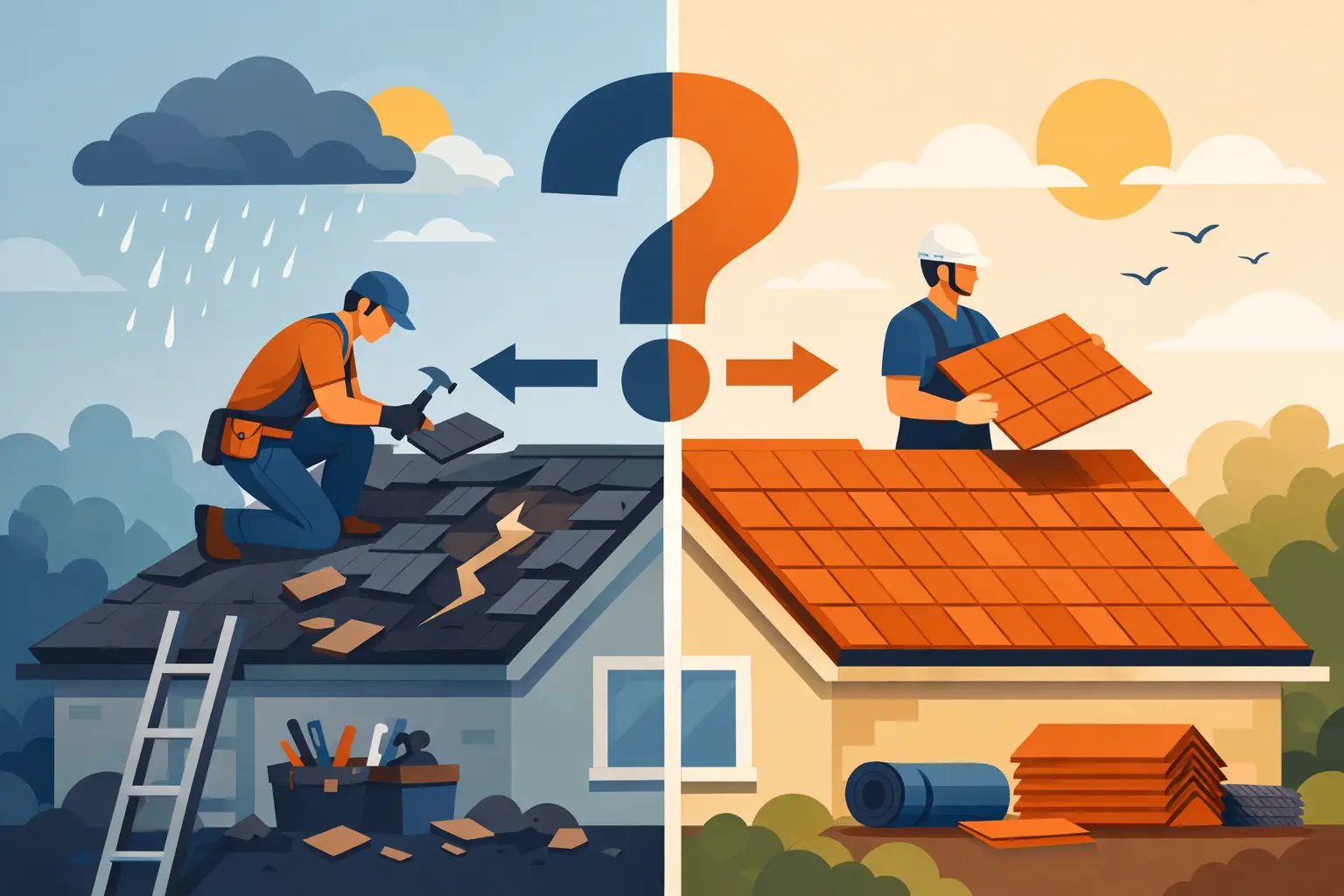
A ceiling stain after a hard rain can make the decision feel urgent: should you repair or replace roof materials before the problem spreads? The right answer is not always the biggest project or the lowest immediate price. It depends on the source of the issue, the roof’s remaining life, the extent of the damage, and what a careful inspection reveals.
A trustworthy contractor should be willing to explain those factors plainly. Some roofs need a focused repair that protects the home for years. Others have reached the point where repeated repairs only postpone a replacement that is already necessary.
Start With the Cause, Not the Symptom
A missing shingle, water spot, or bit of granule buildup is a sign that deserves attention. It is not, by itself, proof that the entire roof has failed. Water can enter around flashing, pipe boots, valleys, skylights, vents, or damaged shingles. In some cases, the roof covering is in good condition and a small, well-executed repair solves the problem.
The key is identifying where water is getting in and why. A stain on the ceiling may appear several feet from the actual leak. Water can travel along roof decking, framing, insulation, or wiring before it becomes visible inside. That is why decisions based only on what can be seen from the ground or inside a bedroom often lead to unnecessary guesswork.
A proper assessment considers the roof surface, flashing details, penetrations, attic ventilation, decking condition, and signs of moisture inside the home. It should also account for the roof’s age and prior repair history. Homeowners deserve a clear explanation of what was found, what can be repaired, and what may need attention later.
When Roof Repair Is the Better Choice
Repair is often the sensible option when damage is isolated and the rest of the roofing system is still performing well. For example, a few shingles may have blown off during a storm, a pipe boot may have cracked, or flashing around a chimney may have loosened. These are specific problems with specific remedies.
A repair may make sense when:
- The roof is relatively young and has substantial expected service life remaining.
- Damage is limited to one defined area rather than appearing across multiple slopes.
- Shingles are generally lying flat, holding their granules, and sealing as intended.
- The roof deck and attic show no widespread evidence of moisture damage.
- A matching or reasonably compatible roofing material is available for the repair.
Repairing a roof promptly can prevent a manageable issue from becoming rotten decking, damaged insulation, mold concerns, or interior repairs. It can also preserve the value of a roof that does not need to be replaced yet.
There is one practical limitation to keep in mind: shingle color changes with sun exposure and age. Even when the same product line is available, a repaired area may not blend perfectly with older shingles. For many homeowners, that is an acceptable trade-off for avoiding a premature replacement. For others, especially when the repair is highly visible, appearance may factor more heavily into the decision.
Signs It May Be Time to Replace the Roof
Replacement becomes more reasonable when roofing problems are widespread, recurring, or connected to the roof’s overall age. A roof can sometimes be repaired beyond the point where repair is financially wise. The question is not whether a contractor can replace a few more shingles. It is whether those repairs give the homeowner dependable protection.
Common signs that point toward replacement include widespread curling, cracking, bald spots where granules have worn away, or shingles that no longer lie flat. Multiple leaks in different areas are another concern, particularly if repairs have already been attempted. Soft spots, sagging roof lines, or damaged decking require prompt professional evaluation because they can indicate deeper structural or moisture issues.
Age matters, but it should not be treated as a deadline. Roofing materials do not all last the same amount of time, and weather exposure, ventilation, installation quality, tree coverage, and maintenance all affect performance. A roof near the end of its expected lifespan may still be repairable, but investing in repeated work may no longer offer good value.
For many Greater Cincinnati homeowners, storm exposure also shapes the decision. Wind, hail, heavy rain, ice, and temperature swings can accelerate wear or cause sudden damage. After a significant storm, a careful inspection can help distinguish between a repairable event and broader damage that changes the replacement conversation.
Repair or Replace Roof: Compare the Real Costs
The least expensive estimate is not always the least expensive decision. A small repair can be a wise investment when it addresses an isolated problem on a healthy roof. But if the roof needs another repair every season, interior water damage remains a risk, or the material is nearing the end of its service life, those smaller invoices can add up quickly.
When comparing repair and replacement, look beyond the immediate price. Consider how long the proposed repair is expected to last, whether other weak areas are likely to fail soon, and whether the repair protects the home through the next several years. Think about the cost of waiting as well. A roof leak that reaches drywall, flooring, framing, or personal belongings can create expenses far beyond the roof itself.
Replacement is a larger investment, but it also provides the opportunity to address the full roofing system. Depending on the project, that may include underlayment, flashing, ventilation, pipe boots, drip edge, and any decking that needs repair. A complete project can offer more predictable protection than patching an aging system in several places over time.
Insurance can be part of the picture after covered storm damage, but a contractor should not promise a claim outcome. Coverage depends on the policy, the cause of damage, deductibles, exclusions, and the insurer’s assessment. Homeowners should document visible storm damage, keep records of inspections and repairs, and review their policy or speak with their insurance representative when a claim may be appropriate.
Ask for an Explanation You Can Understand
Roofing decisions can feel intimidating because much of the work happens out of sight. You should not have to accept vague statements such as “it needs a new roof” without seeing the reasoning behind that recommendation.
Before approving repair or replacement work, ask a contractor to explain the condition of the shingles, flashing, decking, ventilation, and other affected components. Ask whether the problem is isolated or widespread, what the proposed work includes, and what it does not include. If replacement is recommended, ask why repair is not expected to provide dependable value.
It is also reasonable to ask about the project process. Know who will communicate with you, how the property will be protected during work, what happens if hidden decking damage is found, and how cleanup will be handled. Clear answers before work begins are a good indicator of how the project will be managed afterward.
Do Not Wait for a Small Leak to Become a Larger Problem
Homeowners sometimes delay calling because the leak seems minor or only appears during heavy rain. Unfortunately, water rarely stays contained. Even a slow leak can weaken wood, damage insulation, and create conditions that are harder and more expensive to correct later.
If you notice loose or missing shingles, granules collecting near downspouts, recurring ceiling stains, damp attic insulation, or visible flashing damage, schedule an evaluation soon. Avoid climbing onto the roof yourself, especially after rain, wind, or ice. A professional inspection is safer and provides a clearer basis for deciding what to do next.
Harbor Exteriors believes homeowners should receive honest guidance, not pressure. Whether the answer is a targeted repair or a full replacement, the work should begin with a straightforward look at the roof’s condition and a recommendation that serves the home well.
The best time to make a roofing decision is while you still have choices. Addressing concerns early gives you time to understand the findings, weigh the options, and move forward with confidence instead of reacting to a larger emergency.