
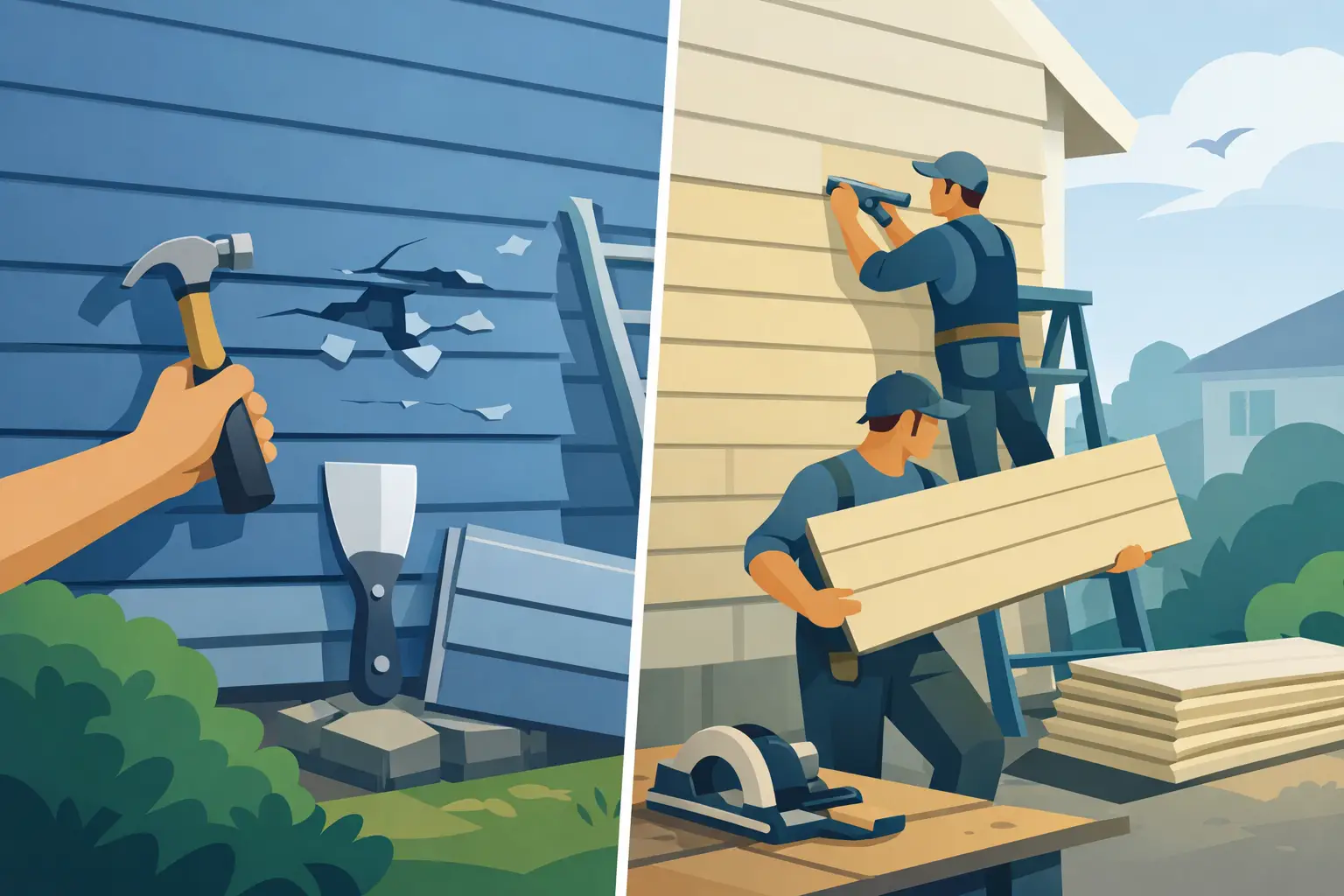
A few cracked panels near the garage can feel like a small problem. But when siding starts letting in water, hiding damage, or making your home harder to maintain, the decision becomes bigger. Siding repair vs replacement is not simply a question of spending less today. It is about choosing the option that protects your home well, fits its condition, and gives you confidence in the work ahead.
For Greater Cincinnati homeowners, that decision also has to account for real weather. Humid summers, freeze-thaw cycles, wind-driven rain, and winter moisture can turn minor exterior issues into costly repairs if they are ignored. The right answer depends on the extent of the damage, the age of your siding, and what is happening beneath the surface.
When Siding Repair Makes Sense
Repair is often the right choice when damage is isolated and the rest of the siding is performing as it should. A small area damaged by a fallen branch, a few loose pieces after strong wind, or localized rot around one window may not justify replacing every wall of your home.
The key is whether the issue is truly limited. A qualified inspection should look beyond the visible panel. If moisture has reached the house wrap, sheathing, or framing, replacing only the surface piece may hide a larger concern rather than solve it.
Siding repair is generally a good fit when the siding is relatively new, the material can still be matched closely, and there are no widespread signs of failure. It can restore protection quickly while preserving the investment you have already made in the rest of the exterior.
Common repairable siding problems
Some issues can often be addressed without a full replacement:
- A few cracked, chipped, or dented panels
- Loose siding caused by wind or failed fasteners
- Small areas of rot or impact damage
- Gaps around trim, vents, windows, or doors
- One section affected by a localized leak
Even in these cases, the repair should address the cause. If a gutter overflow, roof leak, or missing flashing is allowing water behind the siding, replacing a damaged board alone will not protect the home for long.
When Siding Replacement Is the Better Investment
Replacement becomes the wiser choice when damage is widespread, recurring, or connected to aging materials. Homeowners sometimes spend years making small repairs because each one seems manageable. Eventually, those repairs can add up while the siding continues to lose its ability to protect the house.
A full replacement gives the contractor the opportunity to inspect the wall system, correct hidden moisture concerns, install proper weather protection, and create a consistent exterior finish. It also removes the challenge of trying to match faded or discontinued siding.
Consider replacement if you notice several areas of deterioration, especially on more than one side of the home. Repeated caulking, peeling paint on wood siding, warped panels, or signs of water intrusion should prompt a closer evaluation.
Warning signs that point toward replacement
Look for patterns, not just one damaged spot. Siding may be nearing the end of its useful life if you see widespread cracking, buckling, fading, soft areas, or repeated separation at seams. Interior clues matter too. Stains near exterior walls, musty odors, peeling paint inside the home, or unexplained drafts can signal that water or air is getting past the exterior.
Wood rot deserves special attention. A small, isolated area may be repairable, but rot can spread behind trim and beneath siding where it is not easy to see. In that situation, a thorough inspection is more valuable than a quick patch.
Replacement is also worth considering when your current siding has become a maintenance burden. If you are repainting frequently, fixing the same areas repeatedly, or worrying about every hard rain, a new siding system may bring more value than another round of repairs.
Comparing Cost Without Looking Only at the Invoice
Repair almost always costs less upfront than replacement, especially when the work is limited to a few panels or one small wall section. That makes it a sensible choice for straightforward damage on siding that still has many good years left.
However, the lowest immediate price is not always the lowest long-term cost. If repairs are needed every season, if hidden water damage is advancing, or if your siding is near the end of its life, replacement can prevent a string of separate expenses. It may also improve energy efficiency, reduce maintenance, and strengthen curb appeal.
Material matching is another financial consideration. Vinyl and fiber cement can fade over time, while older products may no longer be available. A repair may be structurally sound but visibly different from the surrounding siding. Depending on where the damage is located, homeowners may decide that a partial wall replacement or full replacement provides a more consistent result.
Insurance may help in some situations, such as sudden storm damage. But normal wear, aging, poor maintenance, and preexisting issues are typically treated differently. It is wise to document damage promptly and understand the condition of your policy before assuming coverage will apply.
The Questions That Lead to a Clearer Decision
A dependable contractor should not push every homeowner toward full replacement. The best recommendation starts with an honest assessment of the siding and the structure behind it.
Ask how much of the siding is affected and whether the damage is cosmetic, structural, or moisture-related. Ask whether there is evidence of problems behind the siding, whether replacement materials can be matched, and how long a repair is reasonably expected to last. You should also understand what is included in the scope of work, from removing damaged material to addressing flashing, house wrap, trim, and cleanup.
For older homes, it is helpful to ask whether the existing siding may contain materials that require special handling. A professional should explain the process clearly rather than treating your concerns as an inconvenience.
The condition of your future plans matters as well. If you expect to sell soon and the siding has one visible damaged area, a well-executed repair may be appropriate. If you plan to stay in the home for many years and the exterior is showing broad signs of age, replacement may offer greater peace of mind and a better long-term return.
Why Cincinnati Weather Changes the Conversation
Exterior materials in Greater Cincinnati have to handle a wide range of conditions. Winter freeze-thaw cycles can widen small cracks. Spring and summer storms can loosen panels and push rain into vulnerable seams. Humidity can make moisture issues harder to ignore, particularly where landscaping, gutters, or rooflines direct water toward the walls.
That is why siding decisions should not be based on appearance alone. A faded panel may be cosmetic. A bowed panel beside a leaking gutter could be evidence of ongoing moisture exposure. The difference affects both the recommended work and the durability of the result.
Good exterior work looks at the whole system. Siding, flashing, trim, windows, roofing transitions, gutters, and drainage all work together to move water away from your home. When one part fails, another part often shows the symptoms.
What a Trustworthy Siding Process Should Look Like
Whether you need repair or replacement, clarity matters from the first visit. You should know what was found, why a specific solution is recommended, what materials will be used, and what the work will cost before the project begins.
At Harbor Exteriors, the goal is to help homeowners make informed decisions without pressure. Some homes need a targeted repair. Others need a replacement plan that addresses aging materials and protects the structure for the years ahead. Honest guidance means being clear about both possibilities.
Pay attention to communication as much as the proposal. A contractor should answer questions directly, set realistic expectations for scheduling and weather delays, protect the property during work, and stand behind the finished project. Those details are not extras. They are part of caring for someone else's home.
A small siding issue is easiest to address before it becomes a hidden moisture problem. If you are unsure whether your home needs a repair or a larger solution, a careful inspection can replace guesswork with a practical path forward - and help you protect the place your family depends on.