
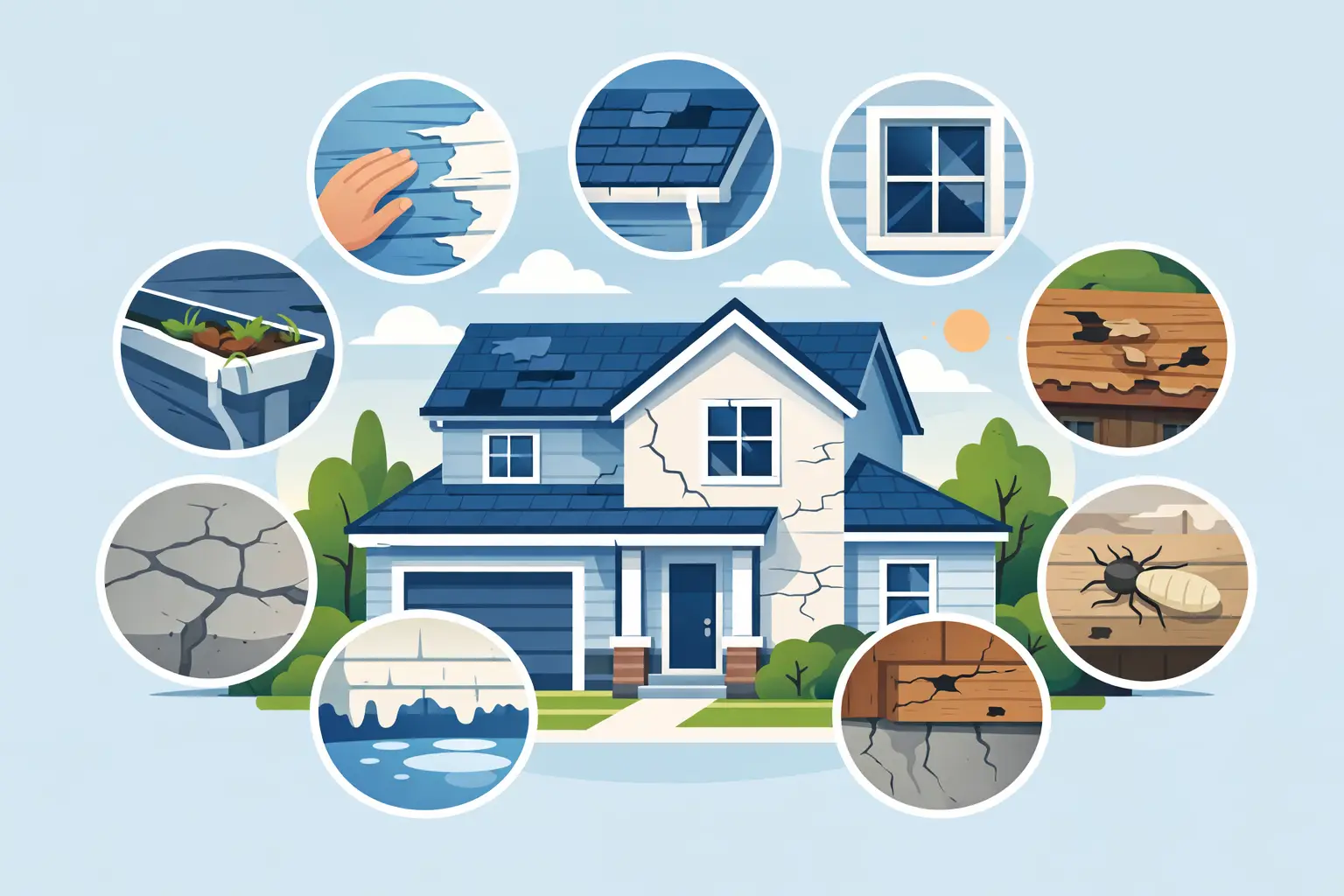
A loose shingle after a windy night or a small water stain near a window can be easy to dismiss. But these are often the first signs your home exterior needs repair. In Greater Cincinnati, changing seasons, heavy rain, humidity, ice, and wind put steady pressure on roofs, siding, gutters, windows, and trim. Addressing a concern while it is still small can protect your home, your budget, and your peace of mind.
1. Missing, cracked, or curling shingles
Your roof is one of your home's most important protective layers. If shingles are missing, cracked, curled at the edges, or visibly lifting, water may have a path beneath the roof surface. You may also notice dark patches, uneven areas, or shingle granules collecting in gutters and at downspout exits.
A few loose granules can be normal as an asphalt roof ages. A large amount of grit, bare-looking shingles, or repeated shingle loss is different. It is a good reason to schedule an inspection before the next hard rain exposes a leak.
2. Water stains, soft spots, or peeling paint
Exterior damage does not always stay outside. Brown ceiling stains, damp attic insulation, bubbling interior paint, or a musty smell near an exterior wall can point to water intrusion. The source may be a roof issue, damaged flashing, failed caulk, overflowing gutters, or a problem around a window or door.
Do not assume a stain is only cosmetic because it is dry when you find it. Water can travel along framing before becoming visible indoors. Finding the entry point early helps prevent rot, mold growth, and more extensive repairs behind the walls.
3. Siding that is warped, loose, cracked, or faded
Siding protects the structure of your home from moisture and weather, but it also gives clear clues when it is no longer doing its job. Look for cracked boards or panels, pieces that have come loose, warping, buckling, holes, or areas that feel soft when gently pressed.
Fading alone does not always mean replacement is needed. South- and west-facing walls often receive more sun and naturally weather faster. Still, severe fading paired with cracking, chalking, or brittleness can signal that the material is nearing the end of its useful life. Wood siding that needs paint again shortly after being painted may be holding moisture or beginning to deteriorate.
4. Gutters that overflow or pull away from the house
Gutters are easy to overlook until water pours over their edges during a storm. Overflow can be caused by leaves and debris, but it can also indicate poor slope, undersized gutters, loose fasteners, or downspouts that are not moving water far enough from the foundation.
Watch for gutters sagging away from the fascia, standing water inside the troughs, rust, split seams, and erosion in the soil below. Water repeatedly spilling near your home can damage trim, stain siding, contribute to basement moisture, and undermine landscaping. Cleaning may solve the problem, but recurring overflow deserves a closer look.
5. Rotting trim or deteriorating wood around windows and doors
Window and door trim is exposed to rain, snow, sun, and temperature swings. When paint cracks or caulk separates, moisture can reach the wood underneath. Early rot may look like dark discoloration, split paint, or soft areas at the bottom corners of trim boards.
Use care when checking suspected rot. You should not need to force or pry at the material. If a gentle press reveals softness, or if you can see gaps around windows and doors, arrange for a professional evaluation. Replacing a limited section of trim is usually much simpler than waiting until the damage reaches sheathing or framing.
6. Drafts, foggy glass, or difficult windows and doors
Not every exterior repair is visible from the curb. A room that feels unusually cold in winter or hot in summer may have an air leak around a window or exterior door. Other warning signs include condensation between window panes, rattling windows, cracked caulk, damaged weatherstripping, or doors that stick and no longer close evenly.
Some drafts can be addressed with new weatherstripping or caulk. Fog between double-pane glass, extensive wood rot, or windows that will not operate properly may call for more involved repair or replacement. The right choice depends on the condition of the unit, not simply its age.
7. Cracks in brick, mortar, or the foundation
Small hairline cracks in concrete or mortar are not automatically an emergency. Materials expand, contract, and settle over time, especially through Ohio's freeze-thaw cycles. However, cracks that widen, run in a stair-step pattern through brick, appear horizontal, or are paired with sticking doors or sloping floors should not be ignored.
Outside, also look for gaps where masonry meets siding, trim, or utility lines. These openings can allow water and pests into the home. A qualified professional can help determine whether the issue is surface-level maintenance, water management, or a structural concern requiring specialized attention.
8. Moss, algae, or dark streaks that keep returning
Dark roof streaks are often caused by algae, while moss can hold moisture against shingles. Green growth on siding, trim, or masonry can indicate that an area stays damp because of shade, poor drainage, clogged gutters, or limited airflow.
Cleaning can improve appearance, but harsh washing methods can create additional damage. Pressure that is too strong may loosen siding, drive water behind exterior surfaces, or remove protective granules from roofing. Before treating recurring growth, address the moisture conditions that allow it to return.
9. Exterior damage after a storm or high winds
Storm damage is not always obvious from the ground. Wind can lift shingle edges without removing them, hail can bruise roofing materials, and flying branches can crack siding, dent gutters, or damage flashing. After a major storm, walk around the property from a safe distance and look for debris, fallen branches, dented metal, missing materials, or new leaks.
Avoid climbing onto a roof or trying to repair elevated areas yourself. Document what you can safely see, including the date of the storm and photos of visible damage. A prompt inspection gives you a clearer understanding of what needs attention and can help prevent a small opening from becoming a larger water problem.
When to Schedule an Exterior Inspection
A visible problem is not the only reason to have your exterior checked. It is wise to schedule an inspection after a severe storm, before listing your home for sale, when you notice a sudden increase in drafts or moisture, or when your roof and siding are approaching the later years of their expected service life.
The goal is not to assume every concern requires a full replacement. Honest exterior guidance should distinguish between routine maintenance, targeted repairs, and work that is no longer practical to delay. At Harbor Exteriors, that means explaining what is found, what it may lead to if left alone, and what options make sense for your home.
Your home does not need to look severely damaged before it deserves attention. A careful repair at the right time can preserve the exterior systems that protect the people and belongings inside. If something around your home has changed, trust that observation and seek a straightforward assessment before the next season puts it to the test.