
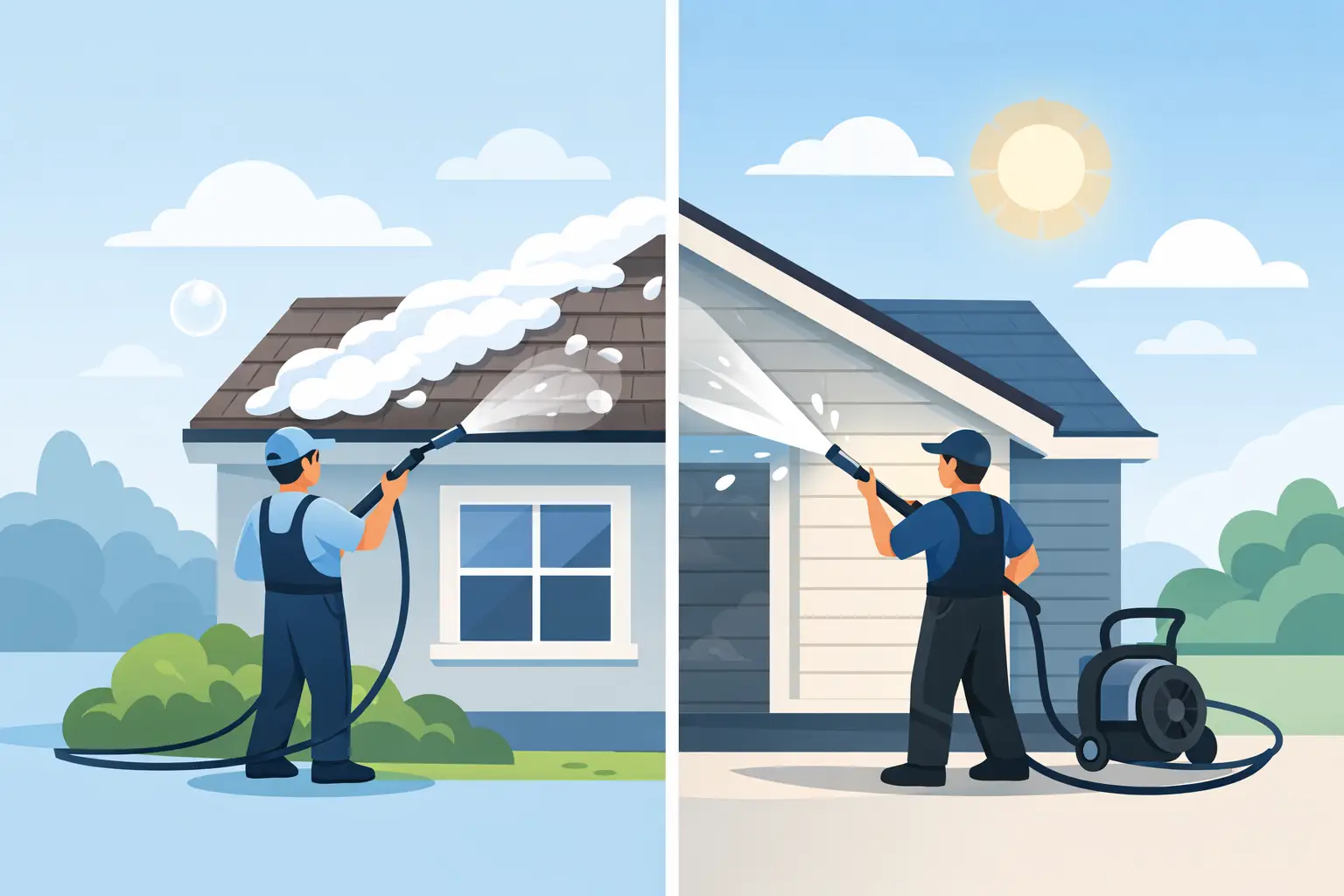
A dark streak on your roof or green film on your siding can make a well-kept home look neglected fast. But when comparing soft wash vs pressure washing, the real question is not which method cleans faster. It is which method cleans the surface thoroughly without causing damage that costs far more to repair.
For homeowners, the right approach depends on the material, the type of buildup, its condition, and how the work is performed. A trustworthy exterior professional should explain that distinction before starting, rather than treating every surface with the same equipment and pressure setting.
What Is Soft Washing?
Soft washing is a low-pressure cleaning method that uses a specialized cleaning solution to treat organic growth such as algae, mildew, mold, lichen, and moss. The solution does much of the work. After it has time to break down the buildup, the surface is rinsed with water at low pressure.
The pressure used in soft washing is closer to a strong garden hose than the force most people picture when they think of pressure washing. That makes it a safer choice for delicate exterior materials, especially when staining is caused by living organisms rather than dirt alone.
Soft washing is commonly used on asphalt shingle roofs, vinyl siding, painted wood, stucco, composite siding, gutters, fences, and many types of exterior trim. It is especially useful in Greater Cincinnati, where humid summers, shaded yards, and tree cover can encourage algae and mildew growth.
A proper soft wash is not simply spraying chemicals on a home. The process requires careful mixing, controlled application, protection for landscaping, proper rinse procedures, and attention to runoff. Used carelessly, even a low-pressure method can harm plants or discolor certain materials. Used correctly, it removes the source of staining while protecting the surface underneath.
What Is Pressure Washing?
Pressure washing uses high-pressure water to remove surface-level dirt, mud, loose paint, tire marks, grime, and other tough debris. It is highly effective when the material being cleaned can tolerate the force of the water.
Concrete driveways, sidewalks, patios, some brick surfaces, and certain heavy-duty hardscape materials are often good candidates for pressure washing. These surfaces collect compacted dirt and stains that may not release with a soft wash alone.
The key word is often. Pressure washing is not automatically safe because a surface looks hard. Old mortar, cracked concrete, loose pavers, weathered brick, and damaged sealant can all be affected by excessive pressure. The same tool that restores a driveway can etch concrete, dislodge mortar, or leave uneven cleaning marks when handled improperly.
Pressure also has a place in more controlled exterior cleaning work, but the setting, nozzle, distance, and technique matter. A qualified technician adjusts the method to the material rather than relying on maximum power.
Soft Wash vs Pressure Washing: The Main Difference
The simplest difference is this: soft washing treats and removes organic growth with cleaning solutions and low pressure, while pressure washing relies primarily on the force of water to remove surface buildup.
That distinction matters because algae, mildew, and moss have roots or holdfasts that can remain after a force-only cleaning. Pressure may make a surface look better right away, but it can leave behind the organisms that caused the discoloration. On sensitive materials, it may also strip protective granules, force water behind siding, or scar the finish.
Soft washing generally delivers a longer-lasting result on surfaces affected by organic growth because it addresses the cause of the staining. Pressure washing is typically the better tool for durable surfaces where dirt, grime, and embedded debris are the main problem.
Neither method is universally better. The best choice is the one that preserves your home while producing a clean, even result.
Which Method Is Best for Common Exterior Surfaces?
Roofs
Asphalt shingle roofs should generally be soft washed, not pressure washed. High pressure can loosen or remove the protective granules that help shingles resist weather and UV exposure. It can also drive water under shingles or disturb older roofing materials.
Those black roof streaks are often algae, not dirt. A low-pressure treatment designed for roofing can remove the growth without putting unnecessary stress on the roof. If moss is present, patience matters. Trying to blast it away can damage the shingles beneath it.
Vinyl Siding
Vinyl siding can look durable, but pressure washing it aggressively creates real risks. Water can be forced behind panels, where it may contribute to moisture issues or reach insulation and wall assemblies. High pressure can also crack aging vinyl or leave visible streaks.
Soft washing is often the safer choice for vinyl siding because it removes mildew, algae, pollen, and general grime with minimal force. The technician should use an appropriate solution, rinse thoroughly, and take care around windows, vents, outlets, and landscaping.
Painted Wood, Stucco, and Delicate Trim
These are surfaces where caution pays off. Pressure washing can remove paint, roughen wood fibers, chip caulk, and damage stucco finishes. Soft washing is usually preferable when the goal is to clean rather than prepare a surface for repainting.
If paint is already failing, cleaning will not restore it. A responsible contractor should point out peeling paint, deteriorated caulk, or damaged trim instead of presenting washing as a cure for maintenance problems.
Concrete, Patios, and Driveways
Concrete is one of the strongest cases for pressure washing. Driveways and walkways often hold dirt, automotive stains, algae, and discoloration that low-pressure rinsing will not fully remove. Professional pressure washing can restore a cleaner, more uniform appearance.
Even here, surface condition matters. Older concrete may be more porous and vulnerable to etching. A technician should inspect for cracks, flaking, exposed aggregate, or previous repairs before choosing the cleaning approach. In shaded areas, a treatment may be used before or alongside pressure washing to address algae and help keep it from returning quickly.
Decks and Fences
Wood is easy to damage with too much water pressure. A powerful stream can carve visible lines into boards, raise the grain, and leave an uneven finish that complicates staining or sealing later.
Soft washing or carefully controlled low-pressure washing is often the better path for wood decks and fences. The cleaning method should account for the wood species, age, existing stain or paint, and whether the surface will be refinished after cleaning.
What Can Go Wrong With the Wrong Method?
The risks are not always obvious on cleaning day. Roof damage may shorten shingle life. Water pushed behind siding may not be noticed until later. Etched concrete can hold dirt more easily, while damaged wood may need sanding or replacement.
There is also a safety concern. Exterior cleaning often involves ladders, wet surfaces, electrical fixtures, chemicals, and high-pressure equipment. A low quote is not a good value if it skips the preparation and care that protect your home.
Before work begins, homeowners should receive a clear explanation of what will be cleaned, the method proposed, the expected result, and any limitations. For example, rust stains, oxidation, permanent paint discoloration, and deep oil stains may require specialized treatment or may not disappear completely. Honest expectations are part of quality service.
How to Choose the Right Exterior Cleaning Service
Ask a prospective provider how they determine whether to soft wash or pressure wash. The answer should involve your specific surfaces, not a one-size-fits-all promise. They should be able to explain how they protect plants, manage cleaning solutions, avoid water intrusion, and handle fragile or damaged areas.
It also helps to ask what they will not clean with high pressure. A professional who is willing to say no to an unsafe method is protecting your property, not simply trying to finish the job quickly.
At Harbor Exteriors, clear communication matters because your home deserves more than a quick surface-level fix. You should know what work is being done, why that method is appropriate, and what to expect when the job is complete.
A clean exterior can renew your home's appearance, but the best result is one that respects the materials already protecting your family. Choose the method that cares for the surface first, then lets the clean appearance follow.