
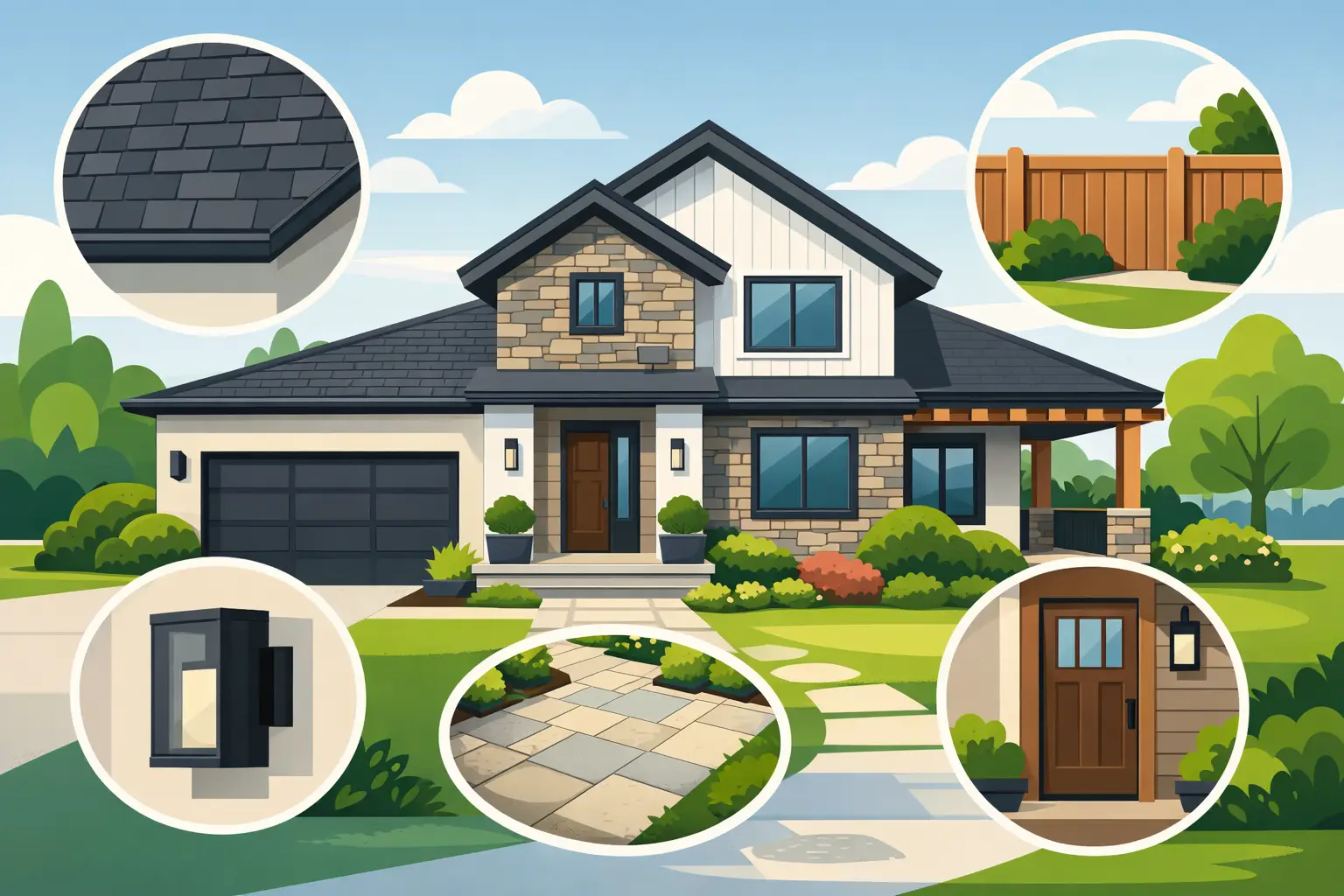
A faded front door, curling roof shingles, or gutters streaked with overflow can make an otherwise well-kept home feel neglected. The top exterior upgrades for curb appeal do more than create a stronger first impression. When chosen carefully, they also protect the home from water, weather, and the steady wear that comes with Ohio River Valley seasons.
For most homeowners, the right place to start is not the most dramatic project. It is the area that is both highly visible and most likely to cause a larger problem if it is ignored. A clear assessment of your home’s condition, budget, and long-term plans helps turn curb appeal spending into a sound investment rather than a collection of cosmetic fixes.
Top Exterior Upgrades for Curb Appeal, Ranked by Impact
1. Replace or restore the roof
Your roof occupies a large part of what people see from the street, especially on a one-story home or a home with a prominent roofline. Dark staining, missing shingles, lifted edges, and uneven color can immediately pull attention away from every other improvement.
A full roof replacement is a significant investment, but it can be one of the most meaningful exterior upgrades when the existing roof is nearing the end of its service life. A new roof gives the entire property a cleaner, more finished appearance while restoring a critical layer of protection.
Color matters, but durability and compatibility matter more. A shingle color should work with the home’s brick, siding, trim, and fixed features rather than compete with them. In Greater Cincinnati, homeowners should also consider how a roofing system handles wind, rain, changing temperatures, and occasional severe weather. The best-looking roof is not a good value if the installation details are overlooked.
If the roof is structurally sound but has dark streaks or surface debris, professional cleaning may improve its appearance. Cleaning is not a substitute for repair, however. A trustworthy contractor should explain the difference plainly instead of recommending replacement before it is needed.
2. Update siding, trim, or exterior paint
Siding and trim establish the visual character of the home. Cracked boards, faded vinyl, peeling paint, and warped trim make a property look older than it may be. Addressing these issues can dramatically improve curb appeal because the changes affect such a broad portion of the exterior.
Full siding replacement makes sense when damage is widespread, moisture has compromised materials, or the current siding has reached the end of its useful life. It can also be a practical choice for homeowners who want lower maintenance and a more consistent appearance for years ahead.
But a complete replacement is not always necessary. Repairing localized damage, repainting wood trim, refreshing shutters, or adding accent siding around an entryway can produce a meaningful improvement at a smaller cost. This is one area where an honest inspection is especially valuable. The proper scope depends on the condition behind the visible surface, not just what can be seen from the driveway.
When selecting colors, choose a main color that fits the neighborhood without disappearing into it. A neutral body color paired with a deeper front door or contrasting trim often ages better than a highly trendy palette. If you plan to sell within a few years, broad appeal usually serves you better than a bold personal statement.
3. Give the front door and entryway attention
The front entry is where curb appeal becomes personal. Guests, delivery drivers, and prospective buyers all experience this part of the home up close. A solid, well-painted front door can make a home feel cared for before anyone steps inside.
Start by looking at the full entry rather than the door alone. Is the hardware worn? Does the storm door obscure the main door? Are the house numbers easy to read? Is the porch light outdated or too dim? Small, coordinated improvements can make the entrance feel intentional.
A new door may be worthwhile if the existing one is warped, drafty, damaged, or difficult to operate. Fiberglass and steel options can provide durable performance with a range of styles. If the door itself is in good shape, a careful repaint and updated hardware may be the better investment.
Avoid choosing an entry color in isolation. Bring home samples and view them in morning shade, afternoon sun, and under porch lighting. Brick, stone, roofing, and landscaping all influence how a color reads from the street.
4. Repair gutters and improve drainage
Gutters may not be the most exciting curb appeal upgrade, but poorly functioning gutters are highly visible when they sag, overflow, pull away from the fascia, or stain the siding. More importantly, they can direct water toward the foundation, damage landscaping, and contribute to rot around roof edges.
Clean, properly pitched gutters with secure downspouts give the roofline a tidy appearance. Seamless gutters can create a cleaner look than heavily seamed systems, particularly on long runs. Gutter guards may also make sense for homes surrounded by mature trees, though they still need occasional inspection and maintenance.
The key question is where the water goes after it leaves the downspout. Extensions, drainage solutions, and grading should carry water away from the foundation without creating a problem for a neighboring property. A curb appeal project should never create a drainage problem hidden just beyond the flower bed.
5. Refresh windows, shutters, and exterior details
Windows frame the home’s architecture. Fogged glass, damaged screens, peeling frames, and mismatched shutters can make the facade feel disjointed. Replacing windows can improve appearance and comfort, but it is a larger project that should be driven by performance needs as well as looks.
For a more modest update, repair damaged trim, repaint shutters, replace bent screens, and clean window exteriors thoroughly. Make sure shutters, if present, are proportioned appropriately and securely attached. Decorative details should look like a natural part of the home, not an afterthought.
Exterior lighting deserves attention here as well. Updated fixtures by the garage, front door, and walkway improve both appearance and safety. Warm, focused light is usually more welcoming than oversized fixtures or harsh bulbs that wash out the front elevation.
Make the Landscape Support the House
Landscaping is often the final layer that brings exterior improvements together. It does not need to be elaborate to be effective. Fresh mulch, trimmed shrubs, edged beds, healthy grass, and a few well-placed seasonal containers can make a substantial difference.
Keep plantings from crowding siding, blocking windows, or trapping moisture against the home. Overgrown shrubs can hide attractive architectural features and make maintenance more difficult. A simple landscape plan with room for plants to mature is usually easier to maintain than densely packed beds.
Walkways and driveways also deserve a close look. Cracks, settling, and uneven surfaces affect both curb appeal and safety. Cleaning concrete, repairing minor damage, and keeping edges clear can make the property feel more orderly without requiring a complete hardscape renovation.
Choose Projects in the Right Order
A homeowner can spend generously on a new door and landscaping, then lose much of the benefit if the roofline is deteriorating or the gutters are overflowing. Start with protection and repairs, then move to major visible surfaces, followed by finish details.
A practical order often looks like this: address roofing, siding damage, drainage, and wood rot first; then consider larger appearance upgrades such as replacement siding, windows, or a new entry door; finally, complete the project with paint, lighting, landscaping, and hardware. This sequence reduces the chance of redoing finished work after an underlying issue is found.
It also helps to consider how long you plan to stay in the home. A family planning to remain for another decade may reasonably prioritize low-maintenance materials and long-term protection. A homeowner preparing to sell may focus on repairs and polished, broadly appealing updates that present the property well without over-improving for the neighborhood.
Work With a Contractor Who Explains the Why
Exterior projects can involve hidden conditions, especially around roofs, siding, trim, and drainage. That makes clear communication just as important as the finished appearance. You should understand what work is recommended, why it is needed, what materials are being used, how the project will proceed, and what to expect if an issue is uncovered.
At Harbor Exteriors, the goal is to help homeowners make decisions with confidence, not pressure. A straightforward conversation about condition, options, cost, and priorities can prevent surprises and help you choose improvements that genuinely serve your home.
Walk to the curb and look at your property the way a first-time visitor would. The next upgrade may be obvious - and when it protects the home as well as improves its appearance, it is likely money well spent.