
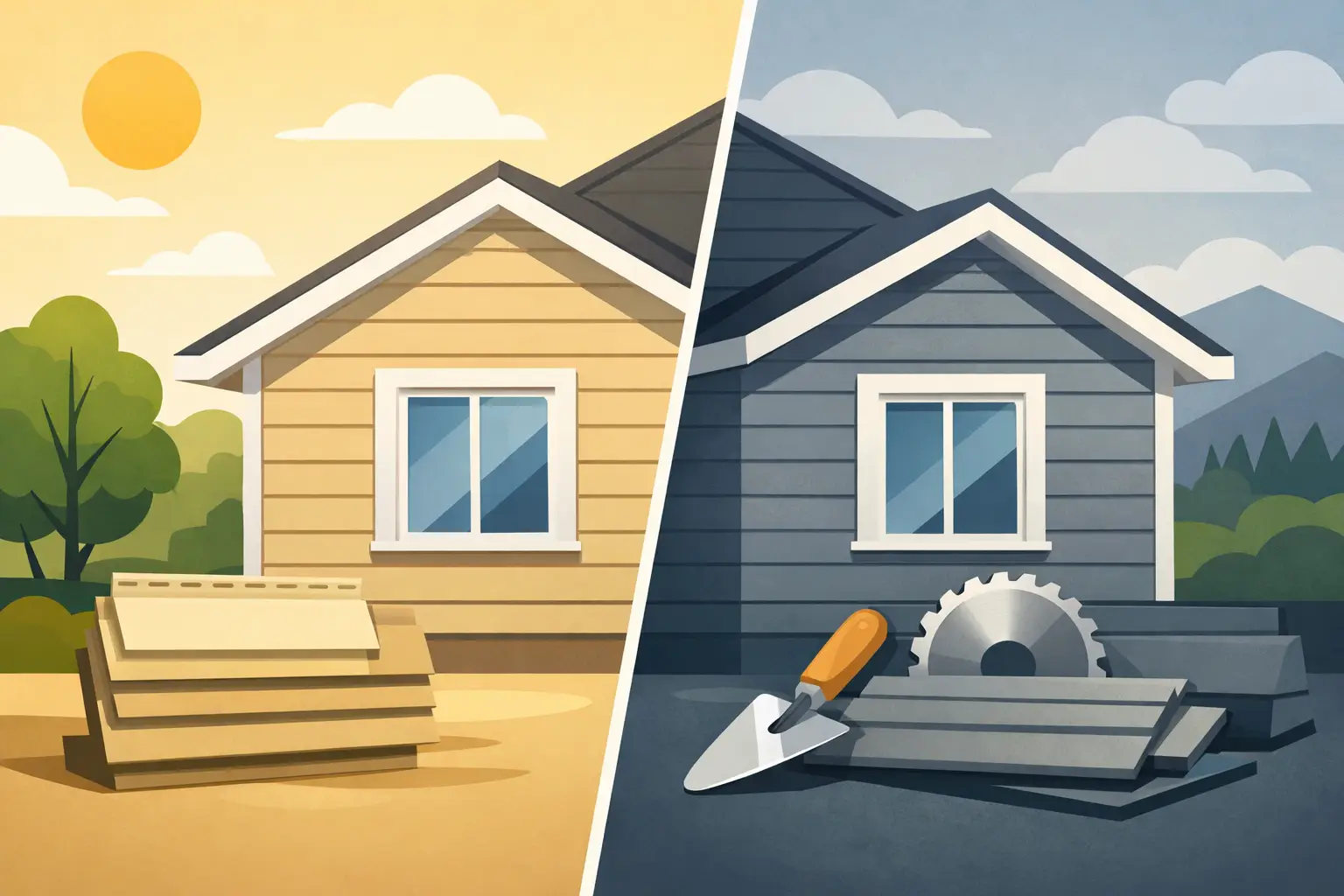
A siding decision is not just about picking a color from a sample board. It affects how your home handles rain, humidity, wind, temperature swings, and the occasional surprise repair. When homeowners compare vinyl siding vs fiber cement, they are usually weighing three things: upfront cost, long-term maintenance, and confidence that the exterior will continue to protect the home well.
Both materials can be good choices. The better fit depends on your budget, the style of your home, its existing condition, and how much maintenance you are comfortable taking on over the years. A clear comparison helps you make that decision without getting lost in contractor jargon.
Vinyl Siding vs Fiber Cement: The Main Difference
Vinyl siding is a molded plastic exterior cladding, most commonly made from PVC. It is lightweight, widely available, and offered in many colors and profiles. Because the color runs through the material, small scratches are often less noticeable than they would be on a painted surface.
Fiber cement siding is a manufactured product made from cement, sand, cellulose fibers, and water. It is heavier and more rigid than vinyl, and it can be made to resemble painted wood lap siding, shingles, or vertical panels. It is usually painted or comes with a factory-applied finish.
The practical difference is straightforward: vinyl generally costs less and requires less routine maintenance, while fiber cement offers a more substantial appearance and stronger resistance to heat, fire, and impact. Neither benefit automatically makes one the right answer for every Cincinnati-area home.
Cost: Upfront Price and Long-Term Value
For many families, the budget conversation begins with installation cost. Vinyl siding is typically the more affordable option. The material is lighter, installation is usually faster, and labor demands are lower than they are with fiber cement.
Fiber cement costs more because the boards are heavier, cutting requires specialized tools and safety practices, and installation requires careful attention to clearances, flashing, fastening, and paint touchups. The condition of your walls, trim, windows, and moisture barrier can also affect the final project price with either material.
A lower initial price does not always mean lower value, and a higher price does not automatically mean a better investment. If you plan to stay in your home for many years and prefer the appearance of painted wood, fiber cement may justify the added expense. If your priorities are dependable protection, clean curb appeal, and a more manageable project budget, quality vinyl may be the better use of your dollars.
Ask for an estimate that explains what is included. A trustworthy siding proposal should make room for items such as house wrap, flashing details, trim work, removal of existing materials, and any expected repairs. Clear scope matters more than comparing two bottom-line numbers that may not cover the same work.
Durability in Greater Cincinnati Weather
Greater Cincinnati homes experience humid summers, winter freezes, heavy rain, strong storms, and changing temperatures from one season to the next. Siding has to do more than look good on installation day.
Vinyl siding resists rot and does not need painting. It holds up well when it is properly installed with room to expand and contract as temperatures change. However, extreme cold can make it more brittle, and hard impacts from branches, hail, lawn equipment, or sports can crack a panel. Darker vinyl colors can also absorb more heat, which may increase the chance of warping if the product is not rated for the color and conditions.
Fiber cement is not vulnerable to rot or insect damage in the way wood siding can be. It also performs well against heat and is noncombustible. Its rigidity gives it a durable, substantial feel, and it generally handles everyday impacts better than vinyl.
Still, fiber cement is not maintenance-free or damage-proof. It can crack if installed incorrectly or struck hard enough. Cut edges, joints, and caulked areas need proper attention. Moisture can become a concern where paint and caulk are neglected, especially around trim, penetrations, and roof-to-wall intersections.
The quality of installation is as important as the material. Siding is part of a larger exterior system. Water management behind the siding, proper flashing, ventilation, trim details, and careful finishing all help determine how well the home performs over time.
Maintenance: Less Work or More Control?
Vinyl is often the simpler choice for homeowners who want low routine upkeep. An occasional gentle cleaning can remove dirt, pollen, and mildew. There is no regular repainting schedule, although individual panels can fade over many years and matching an older color for a repair may be difficult.
Fiber cement needs more active care. It should be inspected periodically, cleaned as needed, and repainted when the finish begins to wear. The repainting timeline varies based on the quality of the paint, sun exposure, moisture exposure, and how well the siding was installed and maintained. Caulked joints and trim details also deserve attention before small gaps become water-entry points.
That extra maintenance gives homeowners a degree of control. Fiber cement can be repainted in a new color when your preferences change. Vinyl color is largely fixed, and painting it requires using a paint formulated for vinyl and staying within safe color limits.
If you want an exterior that asks very little of you from year to year, vinyl has an advantage. If you are comfortable planning for repainting and appreciate the flexibility of a painted finish, fiber cement may be worth the commitment.
Appearance and Curb Appeal
This is where personal preference deserves real weight. Modern vinyl siding has improved considerably, with wider panels, deeper shadow lines, insulated options, and profiles that can complement many traditional and contemporary homes. It can create a clean, consistent exterior at a practical price.
Fiber cement is often selected for its closer resemblance to painted wood. It can offer sharper lines, more convincing wood-grain texture, and a more architectural look, especially on homes with detailed trim, gables, board-and-batten accents, or historic-inspired design elements.
Neither choice will improve curb appeal if the surrounding details are overlooked. Siding color, trim proportion, shutters, gutters, soffit, and the front entry all work together. It is wise to view full-size samples outdoors at different times of day instead of choosing from a small indoor swatch.
When Vinyl Siding Is Usually the Better Fit
Vinyl may be the right choice if you want to control project costs, reduce ongoing maintenance, or refresh an aging exterior without taking on regular painting. It is also a sensible option for homeowners who value a wide selection of colors and want a proven material that performs well when installed correctly.
It can be especially practical when the home needs several exterior updates at once. Choosing vinyl may leave room in the budget for needed repairs, new gutters, improved trim, or other work that protects the house from water damage.
When Fiber Cement Is Usually the Better Fit
Fiber cement may be a stronger fit if the look of painted wood is central to your vision, you want added resistance to heat and impact, or your home has an architectural style that benefits from crisp, detailed siding and trim.
It also makes sense for homeowners who see exterior maintenance as part of responsible long-term ownership. The material can serve a home well for many years, but it rewards careful installation and timely paint and caulk maintenance.
A Better Way to Make the Decision
Before choosing a product, start with the condition of the home beneath the existing siding. Look for soft trim, staining, damaged sheathing, gaps around windows, aging caulk, and drainage issues. New siding should not be used to hide active water problems.
Then consider how long you expect to own the home, what level of upkeep feels realistic, and which exterior style you will still appreciate years from now. A contractor should be willing to discuss the trade-offs plainly, not steer every homeowner toward the same material.
At Harbor Exteriors, we believe a good exterior project starts with honest answers about the home and a clear explanation of the work ahead. The right siding choice is the one that fits your home, your priorities, and your peace of mind - with the details handled carefully from the wall behind the siding to the finished trim you see every day.