
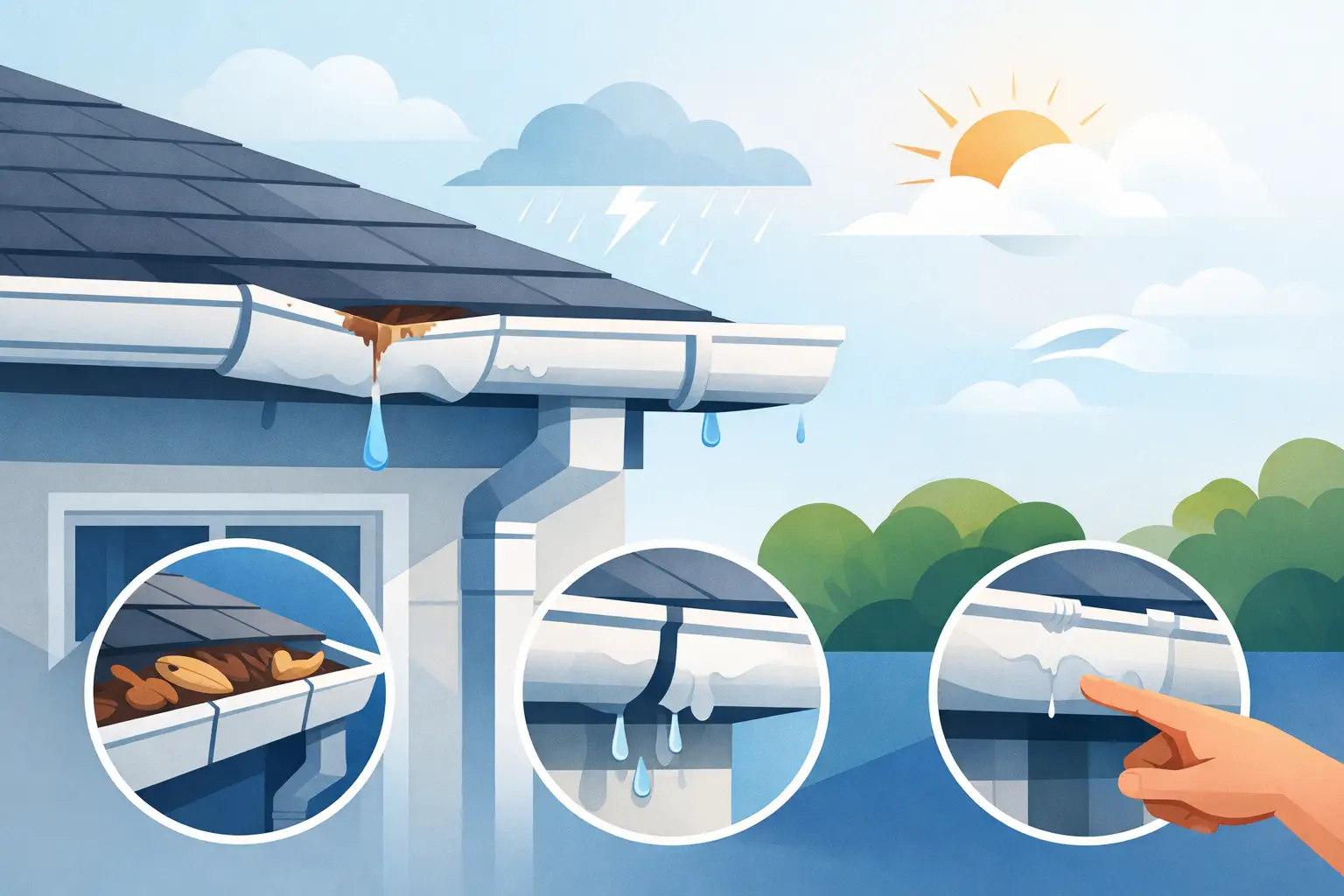
A gutter can look acceptable from the driveway while quietly sending water where it does not belong. Overflow at one corner, a drip behind the gutter, or a downspout that never seems to keep up can all lead to damaged trim, wet basements, and foundation concerns. If you are asking when should gutters be replaced, the answer depends less on age alone and more on whether the system can still direct rainwater safely away from your home.
For Greater Cincinnati homeowners, that question deserves attention. Heavy rain, freeze-thaw cycles, falling leaves, and winter ice can steadily wear on gutters and the fasteners that hold them in place. Knowing the difference between a repairable problem and a failing system helps you make a practical decision before minor water issues become expensive exterior repairs.
When Should Gutters Be Replaced Instead of Repaired?
A single loose hanger, a small seam leak, or a clogged downspout does not automatically mean replacement is necessary. Those issues can often be corrected if the gutter runs are otherwise solid, properly pitched, and securely attached.
Replacement becomes the wiser choice when problems are repeated, widespread, or tied to the condition of the gutter material itself. Patching several leaks every season may cost less today, but it does not solve a system that is pulling away from the roofline or rusting through in multiple places. A clear evaluation should account for the whole drainage system - gutters, downspouts, fasteners, outlets, and the fascia behind them - rather than treating each visible symptom separately.
The right decision also depends on your plans for the home. If you expect to replace a roof soon, it can make sense to coordinate the work. If you are addressing recurring basement moisture or replacing rotted fascia, new gutters may be a necessary part of protecting the repair.
8 Signs Your Gutters May Need Replacement
1. Cracks, holes, or separated seams keep appearing
Small cracks can sometimes be sealed, particularly when they are isolated and the surrounding metal remains sound. But cracks tend to grow as water freezes and expands, and a line of failed seams is a sign that the system has reached the end of its useful service life.
Look closely after a rainstorm. Water dripping from the middle of a gutter run, rather than flowing toward a downspout, points to a leak that needs attention. If several sections leak or repairs have already failed, replacement is usually more dependable than another round of sealant.
2. Gutters sag, pull away, or hold standing water
Gutters need a slight slope so water moves toward the downspout. When they sag between hangers or pull away from the fascia, they can collect water and debris. That extra weight can make the problem worse, especially during a hard Cincinnati storm or after ice has formed along the roof edge.
A few missing or loose hangers can often be replaced. However, widespread sagging may indicate bent gutters, deteriorated fascia boards, undersized fasteners, or an installation that no longer has the proper pitch. In that situation, simply adding a hanger may not provide a lasting answer.
3. You see rust, corrosion, or peeling finish
Painted steel gutters can eventually rust, particularly at seams and low spots where water sits. Aluminum does not rust in the same way, but it can corrode, dent, and develop a chalky or peeling finish over time. Cosmetic wear is not always urgent, but corrosion that has weakened the material is.
If rust has created pinholes, the gutter is no longer reliably carrying water. Repainting may improve appearance, but it cannot restore metal that has deteriorated. Replacing affected runs protects the wood and landscaping below from ongoing leaks.
4. Water overflows even after cleaning
Leaves, shingle grit, and nests can block a gutter or downspout, so cleaning should always be considered first. If the system still overflows after it is clear, the issue may be improper slope, too few downspouts, undersized gutters, or outlets that cannot handle the roof's water volume.
This is especially noticeable during intense rain. Water may spill over the front edge and splash against siding, windows, and planting beds. It may also run behind the gutter, where it can soak the fascia and roof edge without being obvious from the ground.
5. There are water stains, rot, or peeling paint near the roofline
Peeling paint on fascia or soffits is often treated as a paint problem. Sometimes it is, but repeated moisture is frequently the real cause. Water that backs up behind a gutter can damage trim long before it becomes visible inside the home.
Soft wood, dark staining, or areas where the gutter no longer has a solid attachment point call for a closer inspection. The gutter replacement itself may be straightforward, but damaged fascia should be addressed at the same time. Installing new gutters over compromised wood only hides the underlying issue.
6. The foundation or basement is showing signs of excess water
Gutters are not the only cause of water near a foundation, but they are one of the first systems worth checking. Downspouts that empty too close to the house, disconnected extensions, and overflowing runs can saturate the soil around basement walls.
Watch for washed-out mulch, soil erosion, puddles beside the foundation, damp basement walls, or water entering after heavy rain. In some cases, extending a downspout resolves the issue. In others, replacement is needed because the gutters cannot consistently collect and direct the water in the first place.
7. The gutters are dented, bent, or damaged by storms
A fallen branch, ladder impact, or heavy ice can deform a gutter enough to disrupt its slope. Dents are sometimes only cosmetic, particularly on a short section that still drains correctly. A bent run that traps water or creates a low point is different.
After a storm, inspect from the ground for sections that look uneven, detached, or visibly twisted. Avoid climbing onto ladders or roofs unless you can do so safely. A professional assessment can determine whether a section can be reset or whether replacement will provide a more secure result.
8. The system is old and needs frequent attention
There is no single expiration date for every gutter system. Material, installation quality, tree coverage, maintenance, and weather exposure all matter. Well-maintained aluminum gutters may serve a home for decades, while neglected or poorly installed gutters can fail much sooner.
The more useful question is whether your gutters are becoming a recurring maintenance problem. If you are scheduling repairs often, dealing with leaks after each major storm, or seeing multiple issues at once, investing in a new system can bring more confidence and less frustration.
What to Consider Before Replacing Gutters
Before choosing new gutters, consider why the current system failed. If the main issue is debris from mature trees, a gutter protection option may reduce cleaning needs, though it does not eliminate maintenance altogether. If overflow occurs during downpours, larger gutters or additional downspouts may be appropriate depending on the roof design and drainage layout.
Material and appearance matter as well. Seamless aluminum gutters are a common choice because they offer a clean look and reduce the number of leak-prone joints along long runs. The best color is usually one that complements the trim, roofline, and siding rather than drawing attention away from the home.
Most importantly, make sure the replacement plan includes proper pitch, secure fastening, correctly placed downspouts, and discharge away from the foundation. A high-quality gutter material cannot overcome poor drainage design or damaged fascia.
A Straightforward Way to Protect Your Home
You do not need to wait for water to reach the basement or for trim to rot before addressing a gutter concern. A visual check after a heavy rain can reveal a great deal: look for overflow, dripping seams, standing water, and downspouts that discharge too close to the home.
When the signs point to replacement, a clear assessment should explain what is failing, what can be repaired, and why a recommended solution makes sense. Harbor Exteriors believes homeowners deserve that kind of straightforward communication. Taking care of a failing gutter system now is a practical way to protect the parts of your home that water can damage quietly and quickly.